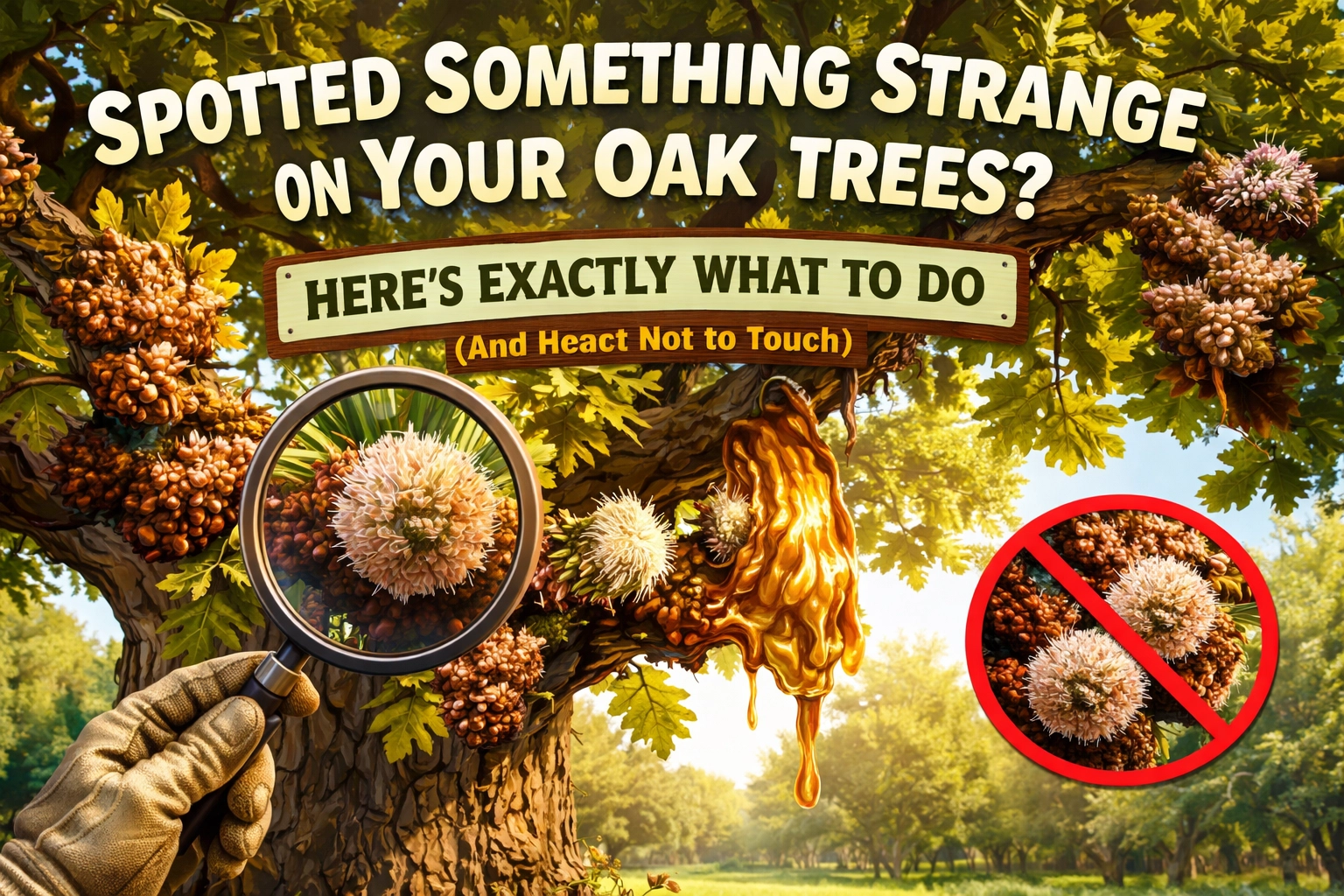
You're out in the garden, maybe having a cuppa and enjoying the view, when you notice something odd on your oak tree. Could be a weird growth, some funky-looking caterpillars, or a white silky nest you've never seen before. Your first instinct might be to grab a stick and poke it, or maybe rip it off and chuck it in the bin.
Stop right there.
Some of the things you might find on your oak trees can actually be harmful to your health. We're not trying to scare you, but certain pests, particularly the Oak Processionary Moth (OPM), can cause serious reactions if you get too close. This guide will walk you through what to look for, what to leave well alone, and when to call in a professional tree surgeon.
What Is Oak Processionary Moth (And Why Should You Care)?
Oak Processionary Moth is an invasive pest that's been spreading across the UK since it first arrived in 2006. Originally found mainly in London and the South East, it's been gradually moving northward, and sightings have been reported in other parts of England too.
The caterpillars are the problem. They're covered in thousands of tiny hairs that contain a toxin called thaumetopoein. If these hairs come into contact with your skin, eyes, or airways, they can cause:
- Painful, itchy rashes
- Eye irritation and conjunctivitis
- Sore throats and breathing difficulties
- In severe cases, allergic reactions
The hairs can travel on the wind, so you don't even need to touch the caterpillars directly to be affected. They can also remain harmful for years after the caterpillars have gone, trapped in old nests and the surrounding bark.
How to Spot OPM on Your Oak Trees
OPM caterpillars and their nests have some distinctive features that make them fairly easy to identify once you know what you're looking for.
The Caterpillars
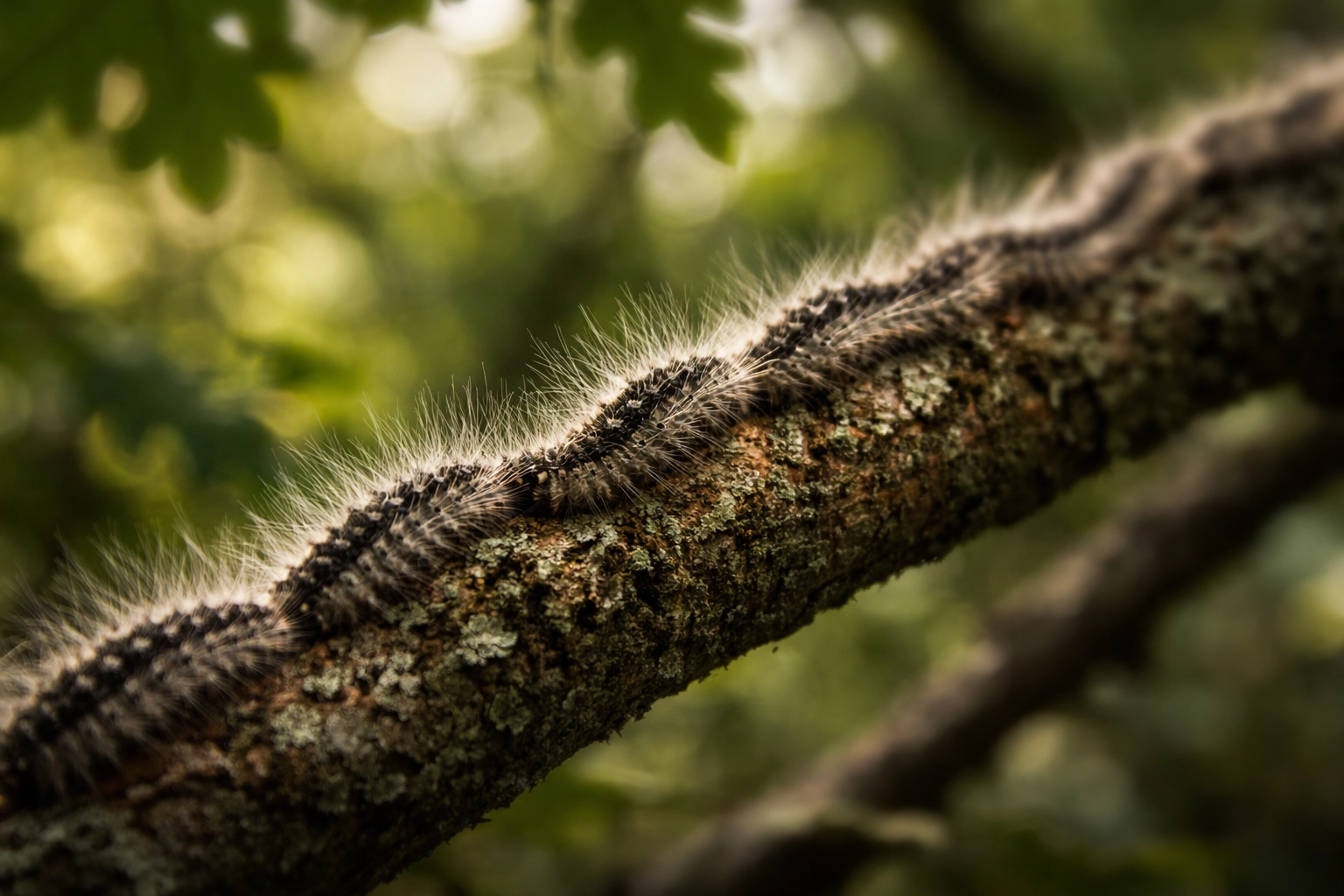
OPM caterpillars are most active between April and July. They move in nose-to-tail processions (hence the name) along branches and down tree trunks, often in an arrow-head formation. They're covered in long white hairs and have a darker stripe running down their backs.
If you see caterpillars moving in a line on an oak tree, keep your distance immediately.
The Nests
OPM nests are white or grey-white in colour, with a silky, webbed appearance. They're often described as looking like candyfloss or cotton wool. You'll typically find them:
- On the trunk of the tree
- In the crooks of branches
- On larger limbs
The nests can range from the size of a golf ball to something much larger, sometimes the size of a small football. Old nests may look more weathered and brown, but they're still dangerous.
Other Strange Things You Might Spot on Oak Trees
OPM isn't the only thing that could be affecting your oak trees. Here are some other common issues to watch out for:
Leaf Problems
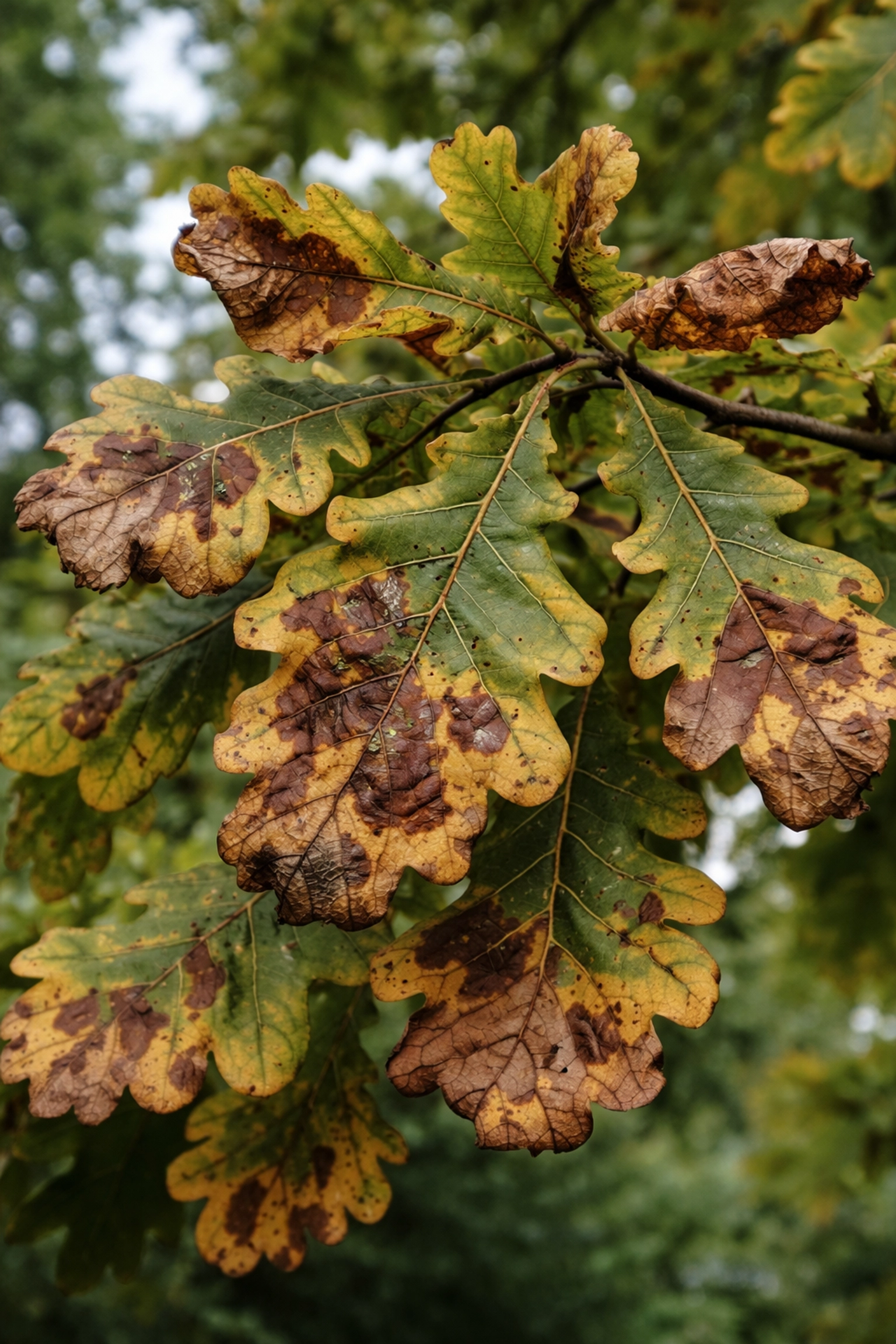
Oak leaf blister shows up as yellow, blister-like raised spots that cause leaves to curl. It's a fungal disease that's common on red oaks but generally isn't too serious.
Bacterial leaf scorch causes browning at the leaf tips and edges, usually with a yellow margin separating the dead tissue from the healthy stuff. You'll typically notice this in mid to late summer.
Oak anthracnose creates irregular brown blotches or scorched-looking leaf edges, and you might notice early leaf drop. It usually starts in the lower canopy and works its way up.
Fungal Growth
Powdery mildew appears as white powdery patches on leaf surfaces. It looks a bit like someone's dusted your leaves with flour.
Armillaria root rot is signalled by large clusters of honey-coloured mushrooms growing at the base of the tree. This is a serious condition that affects the roots.
Hypoxylon canker shows up as grey-tan fungal mats beneath the outer bark and usually indicates significant stress to the tree.
When It's Serious
If your oak tree has small, stunted leaves, a thinning canopy, and branches dying back, these could be signs of a serious underlying problem. Oak wilt, in particular, can kill red oaks within weeks of infection.
What to Do If You Spot Something Strange
Right, so you've found something unusual on your oak tree. Here's your action plan:
Step 1: Keep Your Distance
This is the most important step, especially if you suspect OPM. Don't touch anything. Don't let your kids or pets near it. Don't try to remove it yourself.
If you've spotted what looks like OPM caterpillars or nests, move at least 10 metres away from the tree.
Step 2: Take Photos (From a Safe Distance)
Use your phone's zoom function to get some clear photos of what you've seen. Try to capture:
- The overall location on the tree
- A close-up of the suspected pest or growth
- Any caterpillars or their movement patterns
These photos will be really helpful when you contact a professional.
Step 3: Report OPM Sightings
If you think you've spotted OPM, you should report it to the Forestry Commission through their TreeAlert online tool. This helps track the spread of the pest and ensures appropriate action is taken.
Step 4: Call a Professional Tree Surgeon
For OPM removal, you need a specialist. Not just any tree surgeon will do: you need someone with specific training and equipment to handle OPM safely. At Treemasters, we have the expertise and protective gear required to remove OPM nests without putting anyone at risk.
For other oak tree problems, a qualified tree surgeon can assess the situation, diagnose the issue, and recommend the best course of action. Sometimes it's a case of monitoring the tree; other times, treatment or pruning might be needed.
Get in touch with our team if you'd like us to take a look.
What NOT to Do
Let's be crystal clear about what you should avoid:
Don't touch OPM nests or caterpillars – Ever. Not with gloves, not with a stick, not with anything. The hairs can penetrate fabric and remain active for years.
Don't try to burn or wash away nests – This can actually spread the toxic hairs into the air and make the situation worse.
Don't prune affected branches yourself – Without proper protective equipment and disposal methods, you're putting yourself at serious risk.
Don't move firewood from infected trees – This is one of the main ways oak diseases spread from tree to tree.
Don't ignore the problem – OPM populations can grow quickly, and the hairs accumulate in the environment. What seems like a small nest this year could become a much bigger problem next year.
Why Professional Removal Matters
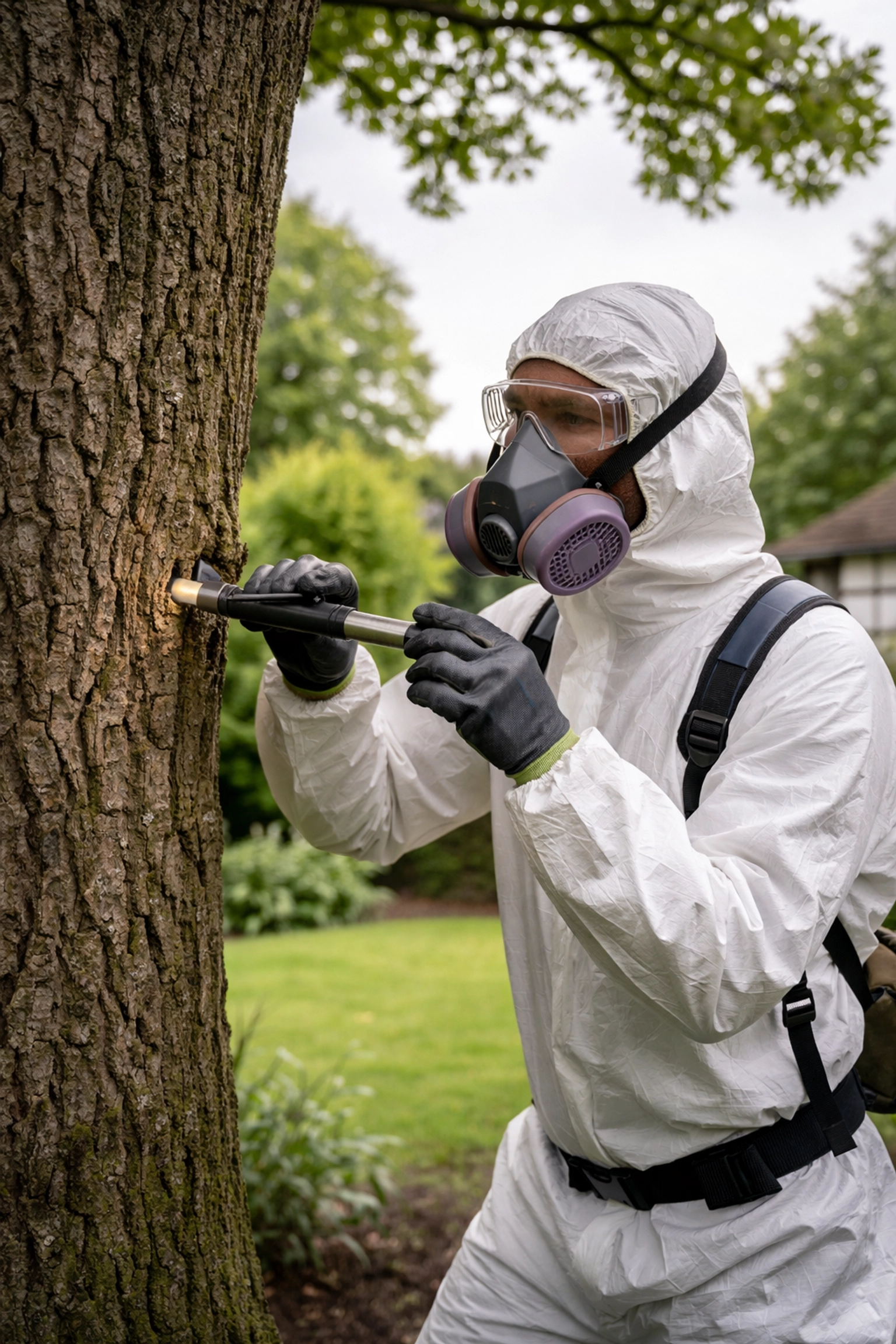
OPM removal isn't a DIY job. Professional tree surgeons who handle OPM use full protective suits, respirators, and specialist vacuum equipment. The nests are carefully removed and disposed of according to strict guidelines.
Beyond safety, there's also the question of effectiveness. Improper removal can scatter those toxic hairs across your garden, creating a hazard that lingers for years. Professional removal ensures the job is done thoroughly and safely.
For other oak tree diseases and problems, a qualified tree surgeon can provide accurate diagnosis and appropriate treatment. Some issues can be managed with careful pruning and tree healthcare programmes, while others might require more significant intervention.
Looking After Your Oak Trees
Prevention is always better than cure. Keeping your oak trees healthy makes them more resilient to pests and diseases. Here are a few tips:
- Avoid pruning in spring and early summer when diseases spread most easily
- If pruning is necessary, seal wounds with pruning paint immediately
- Address issues like soil compaction and poor drainage that stress your trees
- Keep an eye on your trees throughout the year so you spot problems early
If you're in County Durham, Sunderland, Seaham, or anywhere in the North East and you've spotted something strange on your oak trees, don't take any chances. Get in touch with the Treemasters team and let us take a proper look. We'd rather you called us for a false alarm than tried to handle something dangerous yourself.
Stay safe out there, and keep your hands off those nests.
Get a Free Quote