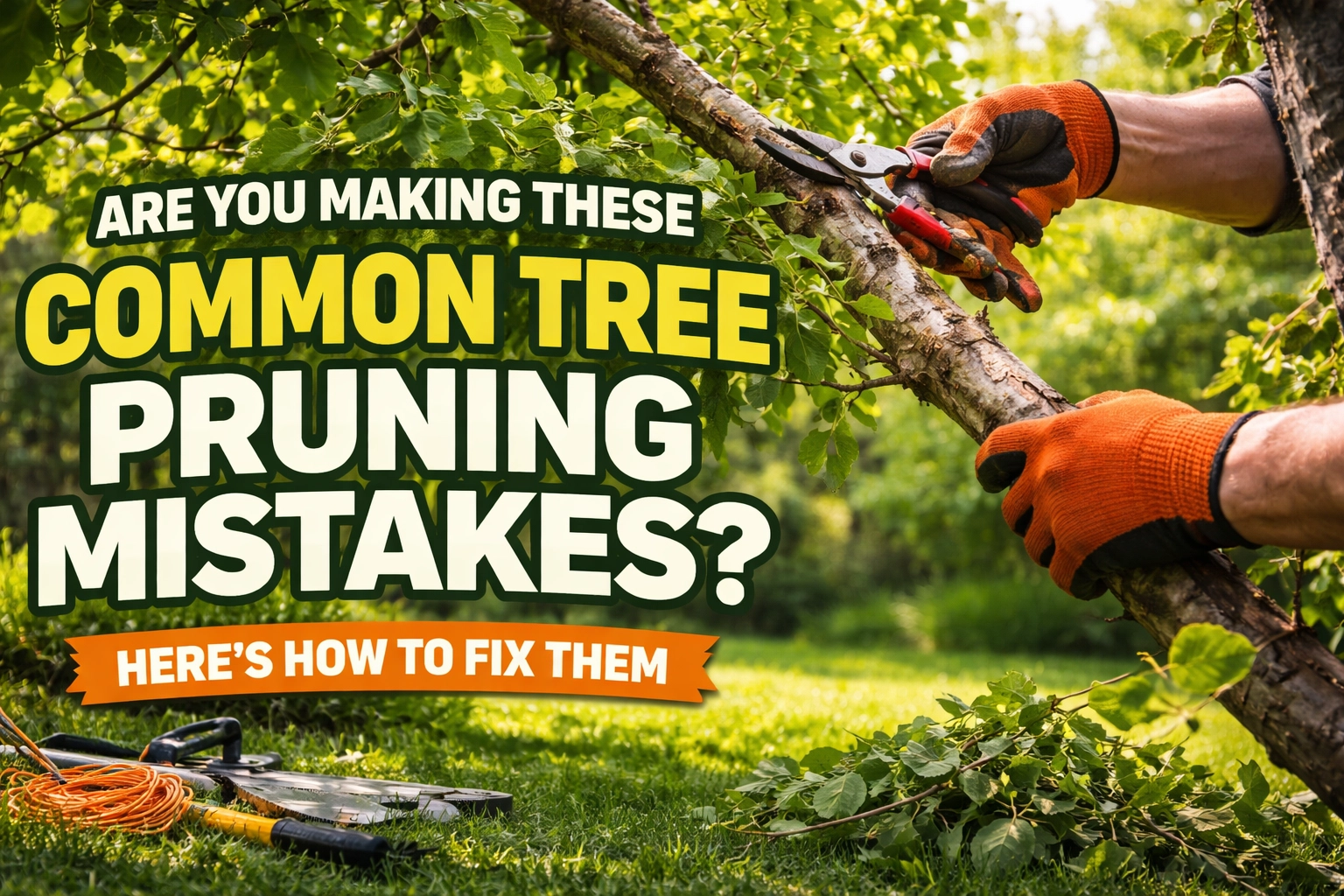
There's something satisfying about getting out into the garden with a pair of loppers and tidying up your trees. Many homeowners across Seaham, Sunderland, and County Durham take pride in maintaining their own gardens: and rightly so.
But tree pruning isn't quite as straightforward as it looks. What seems like a simple trim can actually cause lasting damage to your trees if done incorrectly. Over the years, we've seen plenty of well-meaning DIY pruning jobs that have left trees stressed, diseased, or structurally weakened.
The good news? Most of these mistakes are easily avoided once you know what to look for. In this guide, we'll walk you through the most common tree pruning errors and show you how to fix them: or when it's best to call in a professional tree surgeon.
Mistake 1: Removing Too Much at Once
This is probably the most common mistake we see. It's tempting to give an overgrown tree a dramatic haircut, but removing too much foliage in one go puts serious stress on the tree.
Trees rely on their leaves to produce energy through photosynthesis. When you strip away a large portion of the canopy, you're essentially cutting off the tree's food supply. This weakens the tree, making it more vulnerable to pests, disease, and poor regrowth.
How to fix it:
As a general rule, never remove more than one-third of the tree's foliage in a single pruning session. If your tree needs significant work, spread it out over two or three years. This gives the tree time to recover between sessions and maintain its health.
If you're unsure how much is too much, it's worth getting advice from a qualified arborist before you start cutting.
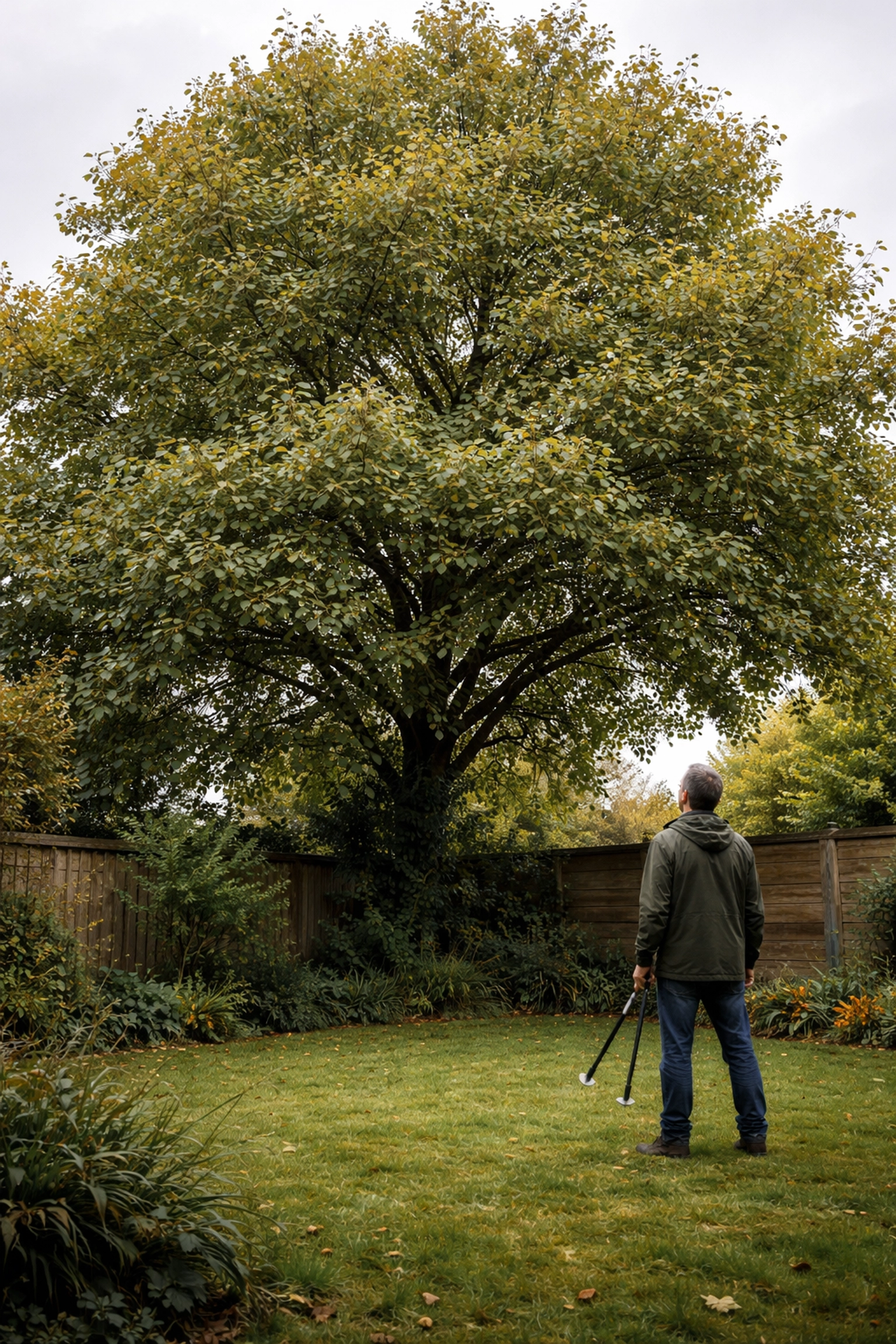
Mistake 2: Cutting Too Close to the Trunk (Flush Cuts)
When removing a branch, many people cut as close to the trunk as possible, thinking this creates a neater finish. Unfortunately, this causes more harm than good.
At the base of every branch, there's a slightly swollen area called the branch collar. This is where the tree's healing tissue is concentrated. When you cut flush against the trunk, you remove this collar entirely: and with it, the tree's ability to seal the wound properly.
The result? An open wound that can't close over, leaving the tree exposed to infection, decay, and structural weakness over time.
How to fix it:
Always cut just outside the branch collar, leaving that small raised ring intact. The tree will then form a protective callus over the wound, sealing it naturally.
For larger branches, use the three-cut method to prevent bark tearing:
- Make an undercut about 30cm from the trunk
- Cut from above, slightly further out, to remove the branch weight
- Make your final cut just outside the branch collar
Mistake 3: Leaving Stubs Behind
The opposite problem to flush cutting is leaving too much branch behind. A stub: that awkward bit of branch sticking out from the trunk: might look harmless, but it creates real problems.
Stubs prevent the tree from healing properly. The exposed wood becomes an entry point for fungi, bacteria, and wood-boring insects. Over time, decay can spread from the stub into the main trunk, compromising the tree's structural integrity.
How to fix it:
Remove branches cleanly and completely. Your cut should be close enough to the trunk to allow proper healing, but not so close that you damage the branch collar. Finding that sweet spot takes a bit of practice, but it makes all the difference.
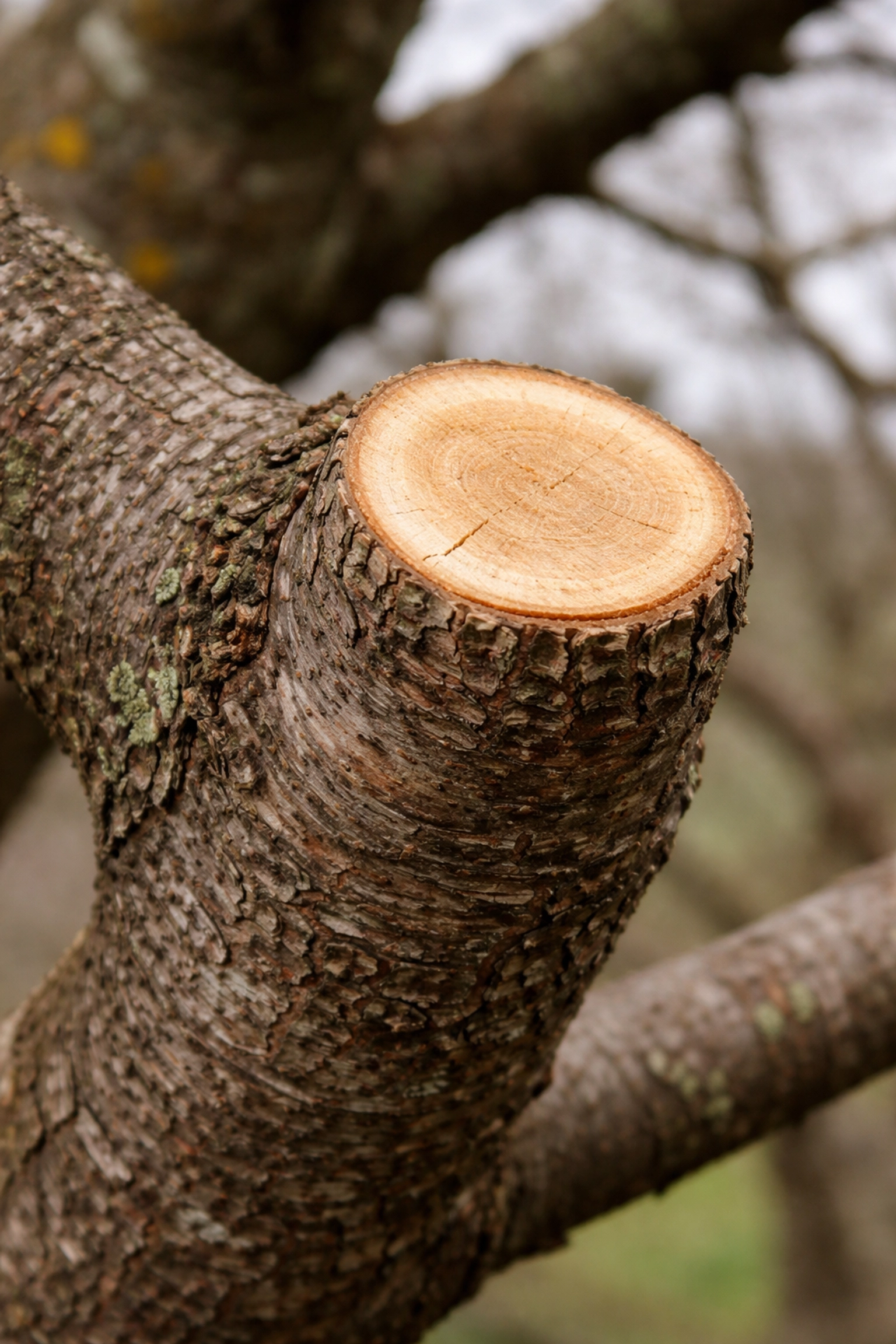
Mistake 4: Using Dull or Inappropriate Tools
It's surprising how much difference the right tools make. Dull secateurs or a blunt saw won't cut cleanly: they'll crush, tear, and shred the bark instead. This creates jagged wounds that are much harder for the tree to heal and far more susceptible to infection.
Using the wrong size tool is equally problematic. Trying to cut through a thick branch with hand secateurs, for example, often results in multiple rough cuts rather than one clean one.
How to fix it:
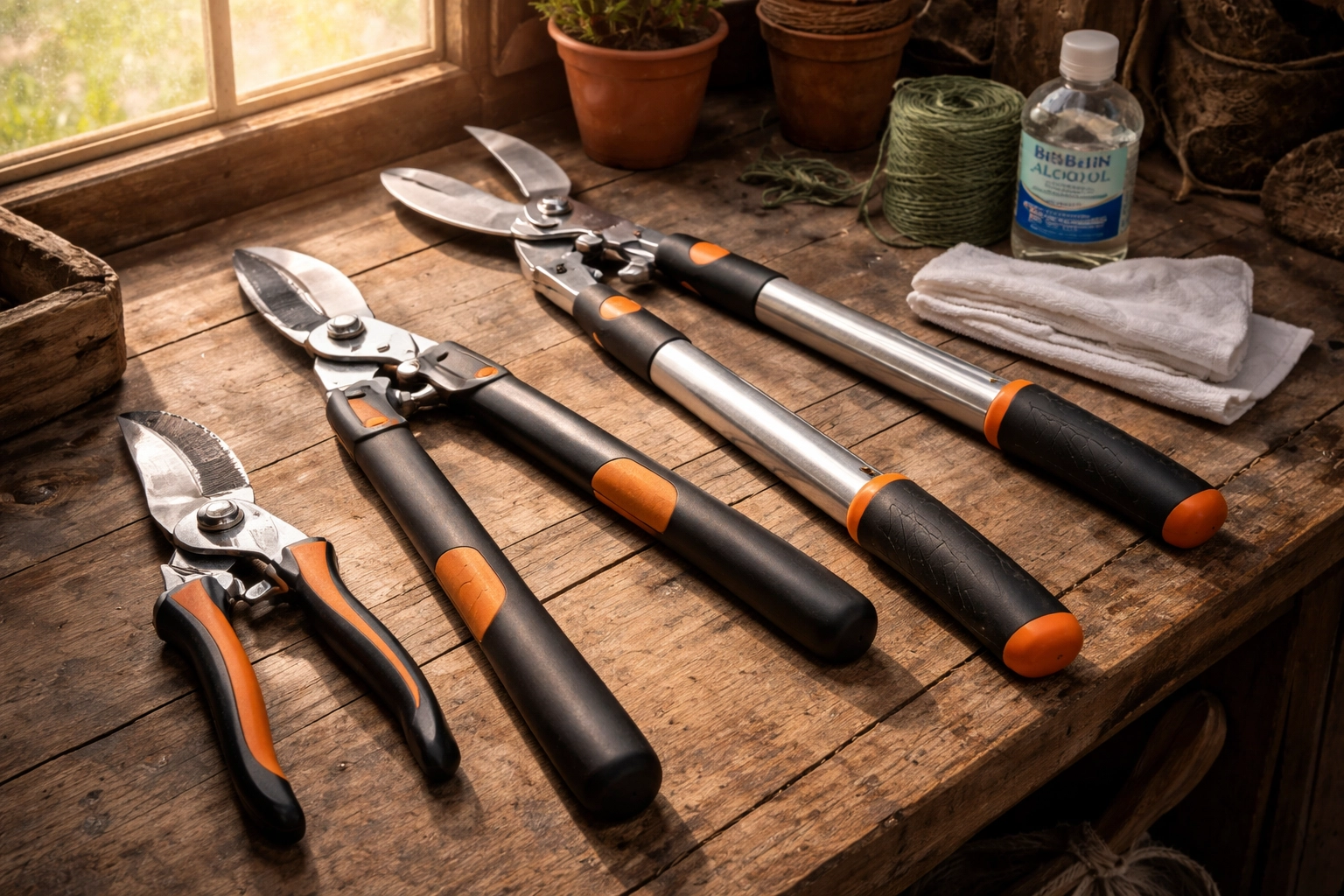
Keep your pruning tools sharp and clean. For most garden pruning, you'll need:
- Secateurs for small twigs and stems (up to about 2cm diameter)
- Loppers for medium branches (2-5cm)
- A pruning saw for anything larger
Before moving between trees, wipe your blades with rubbing alcohol or a diluted bleach solution. This prevents you from accidentally spreading disease from one tree to another: something that's particularly important if you're working on a tree that already shows signs of illness.
Mistake 5: Pruning at the Wrong Time of Year
Timing matters more than most people realise. Pruning during the wrong season can stress trees unnecessarily or leave them vulnerable to disease.
Heavy pruning during the growing season (spring and summer) forces the tree to divert energy into healing wounds rather than healthy growth. For certain species: like cherries and plums: summer pruning increases the risk of silver leaf disease.
On the other hand, pruning maples, birches, and walnuts in late winter causes excessive sap bleeding. While this rarely kills the tree, it's messy and can weaken it over time.
How to fix it:
For most deciduous trees, late autumn to early winter is the best time to prune: after the leaves have fallen but before the coldest weather arrives. The tree is dormant, diseases are less active, and you can see the branch structure clearly.
However, there are exceptions. If you're unsure about the best timing for a particular species, a quick call to a local tree surgery company can save you trouble down the line.
Mistake 6: Ignoring Dead, Crossing, or Crowded Branches
Sometimes the biggest pruning mistake is simply not pruning at all: or not pruning the right things.
Dead branches are more than just unsightly. They're a safety hazard, particularly in windy weather, and they attract pests and disease. Crossing branches that rub against each other create wounds that never heal properly. Overcrowded canopies block airflow and sunlight, creating damp conditions where fungal infections thrive.
How to fix it:
Make deadwood removal a regular part of your garden maintenance. Walk around your trees periodically and look for:
- Dead or dying branches (brittle, no leaves in season, peeling bark)
- Branches that cross and rub against each other
- Dense areas where light can't penetrate
Removing these problem branches improves the tree's health, appearance, and safety. For crown thinning work: selectively removing branches to improve airflow: aim to take out no more than 25% of the live canopy.
When to Call a Professional Tree Surgeon
There's plenty of light pruning work that's perfectly safe for a competent DIYer. Trimming small branches, removing deadwood from shrubs, and shaping young trees are all manageable tasks with the right tools and knowledge.
However, some jobs really do need professional tree surgery:
- Any work at height – Climbing trees or using ladders while handling cutting tools is genuinely dangerous without proper training and equipment.
- Large or heavy branches – These require careful rigging to lower safely without damaging property or the tree itself.
- Trees near power lines or buildings – The risk of something going wrong is simply too high.
- Mature or valuable trees – Poor pruning on an established tree can cause damage that takes decades to recover from, if it recovers at all.
- Trees showing signs of disease – Correct diagnosis and treatment require specialist knowledge.
If you're in any doubt, it's always worth getting a professional assessment. A good arborist will give you honest advice about what you can tackle yourself and what needs expert attention.
Looking After Your Trees in the North East
Trees are a long-term investment in your property and local environment. Whether you're maintaining a single garden tree in Seaham or managing woodland in County Durham, proper pruning makes a real difference to their health, safety, and appearance.
If you've got trees that need attention: or you're not sure whether a DIY approach is appropriate: we're happy to take a look. At Treemasters, we offer professional tree pruning and tree surgery services across Sunderland, County Durham, and the wider North East.
Get in touch for friendly, straightforward advice. We'll help you work out the best approach for your trees and your budget.
Leave a Reply