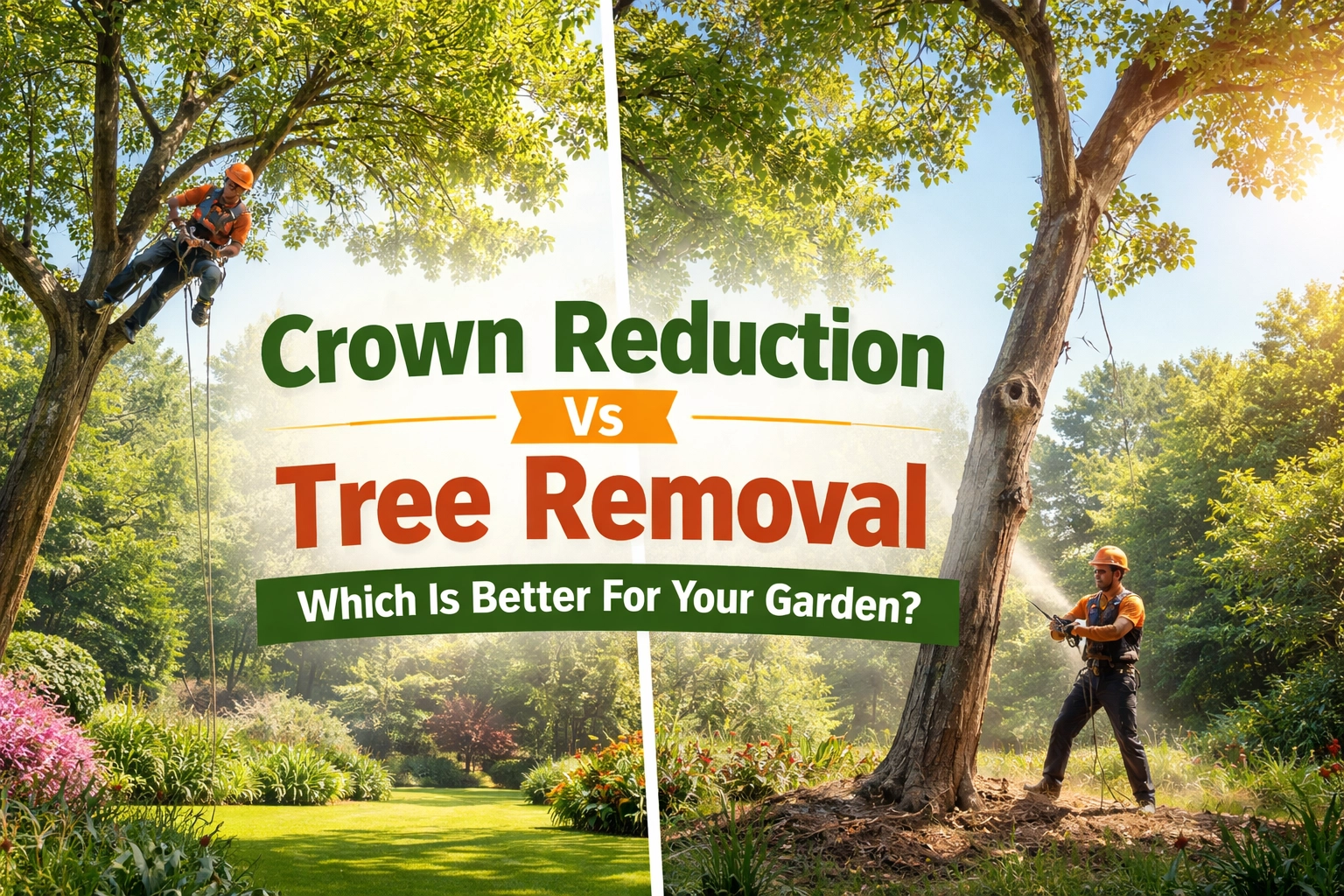
When a tree in your garden starts causing problems, you're faced with a decision that many homeowners across County Durham and the North East find difficult. Should you reduce the crown to manage its size, or is it time to remove the tree entirely?
Both options have their place in proper tree management. The right choice depends on the tree's health, its location, and what you want to achieve in your outdoor space.
This guide breaks down the key differences between crown reduction and tree removal, helping you understand when each option makes sense and what to expect from either approach.
What Is Crown Reduction?
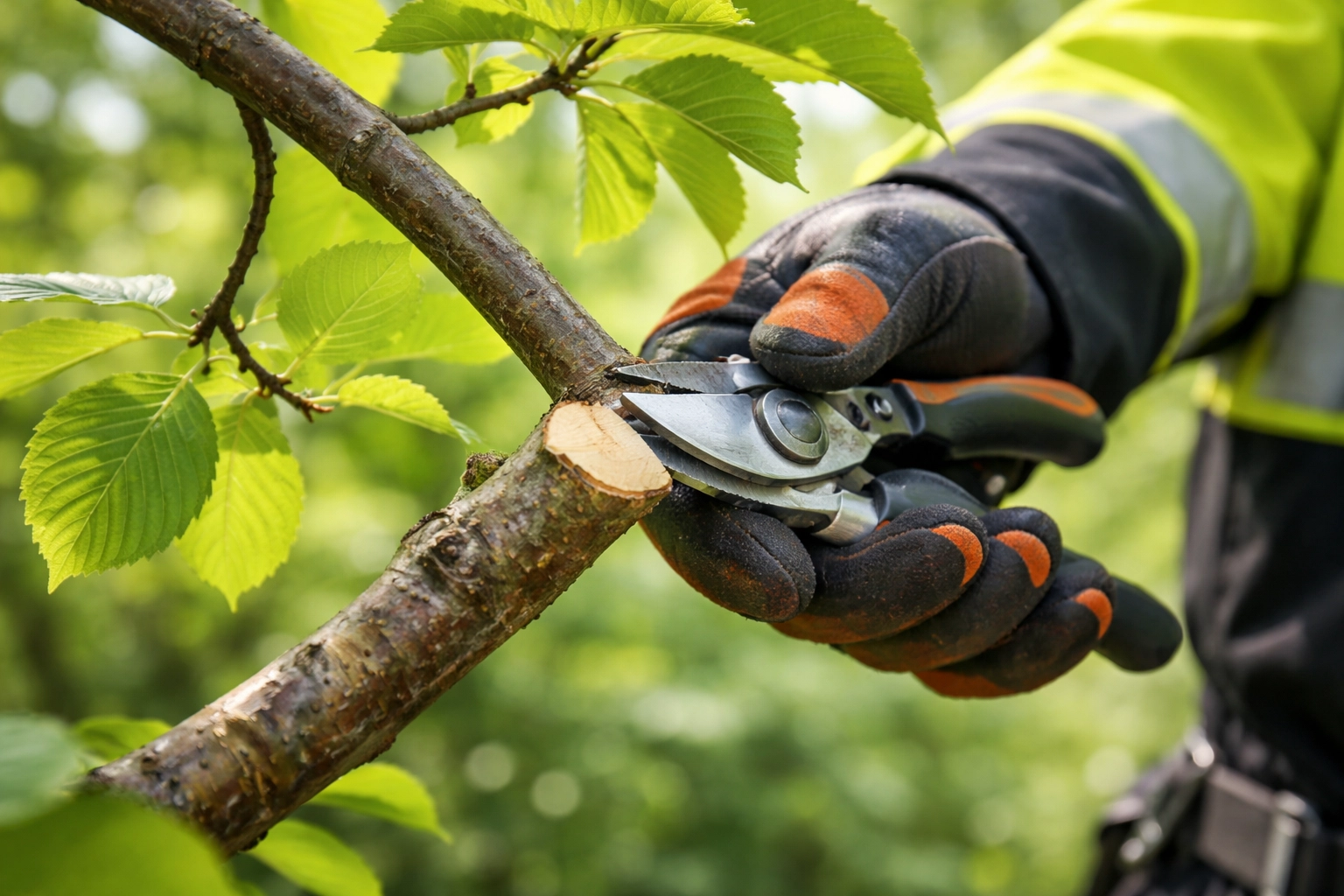
Crown reduction is a skilled tree surgery technique that reduces the overall size of a tree's canopy. Rather than removing the tree entirely, an arborist carefully cuts back branches to specific points, typically reducing the foliage by around 20-30%.
The goal is to make the tree smaller and more manageable while keeping it healthy and maintaining its natural shape. When done correctly, crown reduction encourages new growth and allows the tree to heal properly.
This method works particularly well when:
- A tree has outgrown its space but is otherwise healthy
- Branches are getting too close to your roof, gutters, or windows
- You want to let more light into your garden
- The tree is blocking views or overshadowing neighbouring properties
- You need to reduce wind resistance on an exposed tree
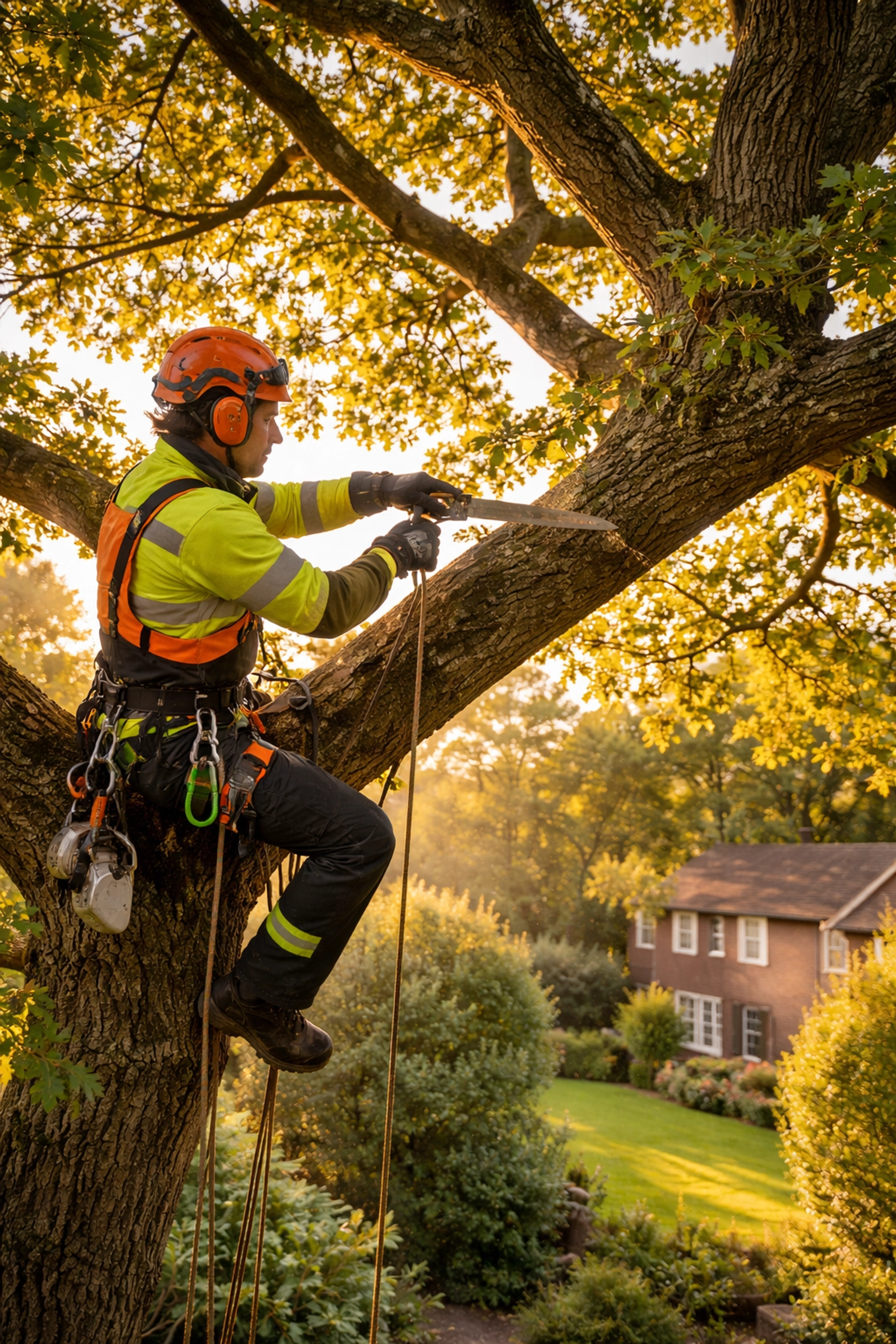
Crown reduction requires proper training and an understanding of how different tree species respond to pruning. Each cut must be made at the right point to encourage healthy regrowth and prevent disease entering the tree.
What Is Tree Removal?
Tree removal is exactly what it sounds like: the complete removal of a tree from your property, including felling the trunk and often grinding out the stump.
It's a more drastic solution, but sometimes it's the only sensible option. Complete removal might be necessary when:
- The tree is dead, dying, or severely diseased
- Storm damage has left the tree structurally unsafe
- Root systems are damaging foundations, drains, or boundary walls
- The tree poses an unacceptable risk to people or property
- You're clearing land for construction or development
- The tree species is unsuitable for its location and cannot be managed
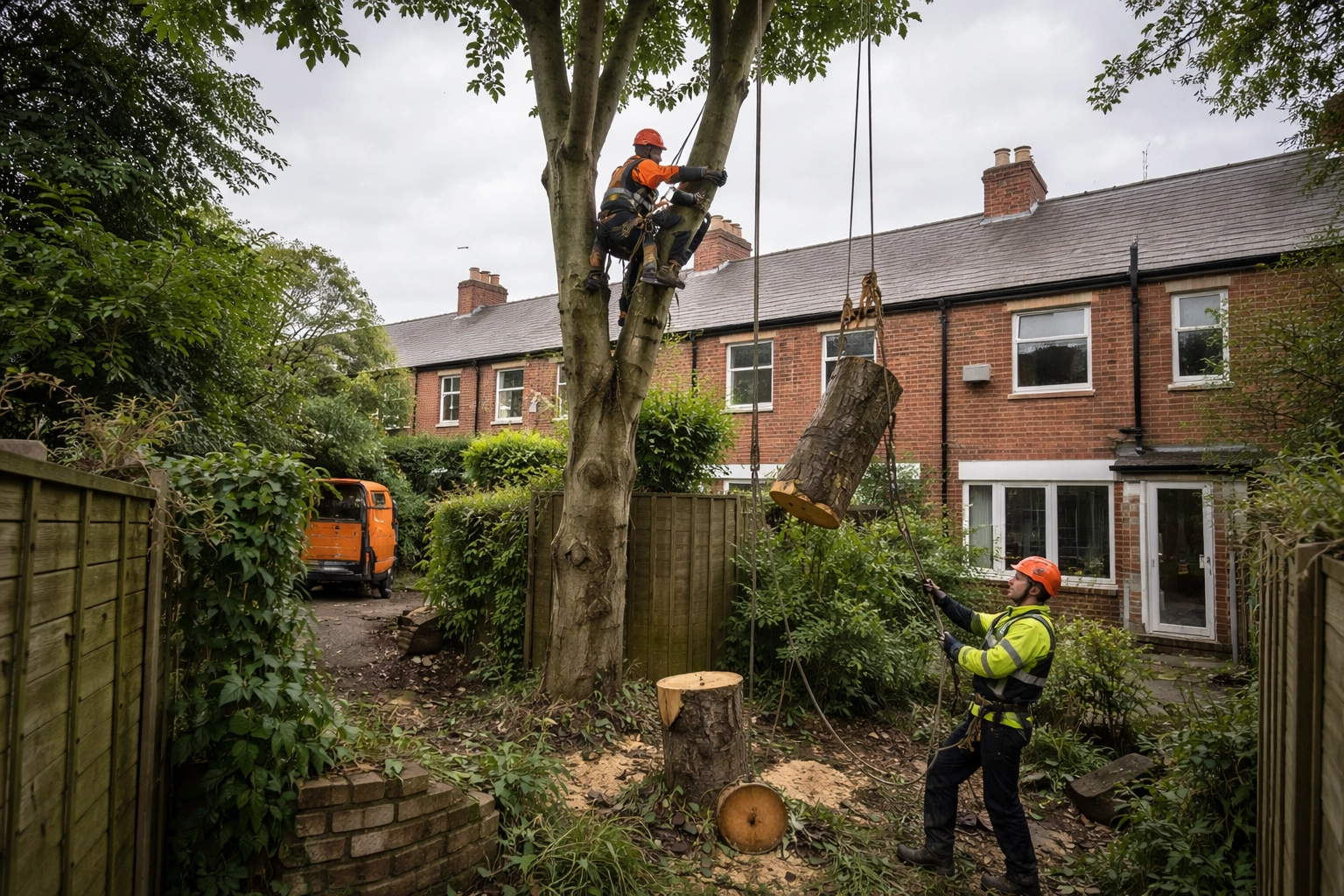
Tree removal in residential gardens requires careful planning. In built-up areas of Sunderland, Seaham, and surrounding towns, there's often limited space for the tree to fall safely. Professional tree surgeons use sectional dismantling techniques, lowering branches and trunk sections with ropes and rigging to protect your property and neighbouring gardens.
Comparing the Two Approaches
Impact on Your Garden
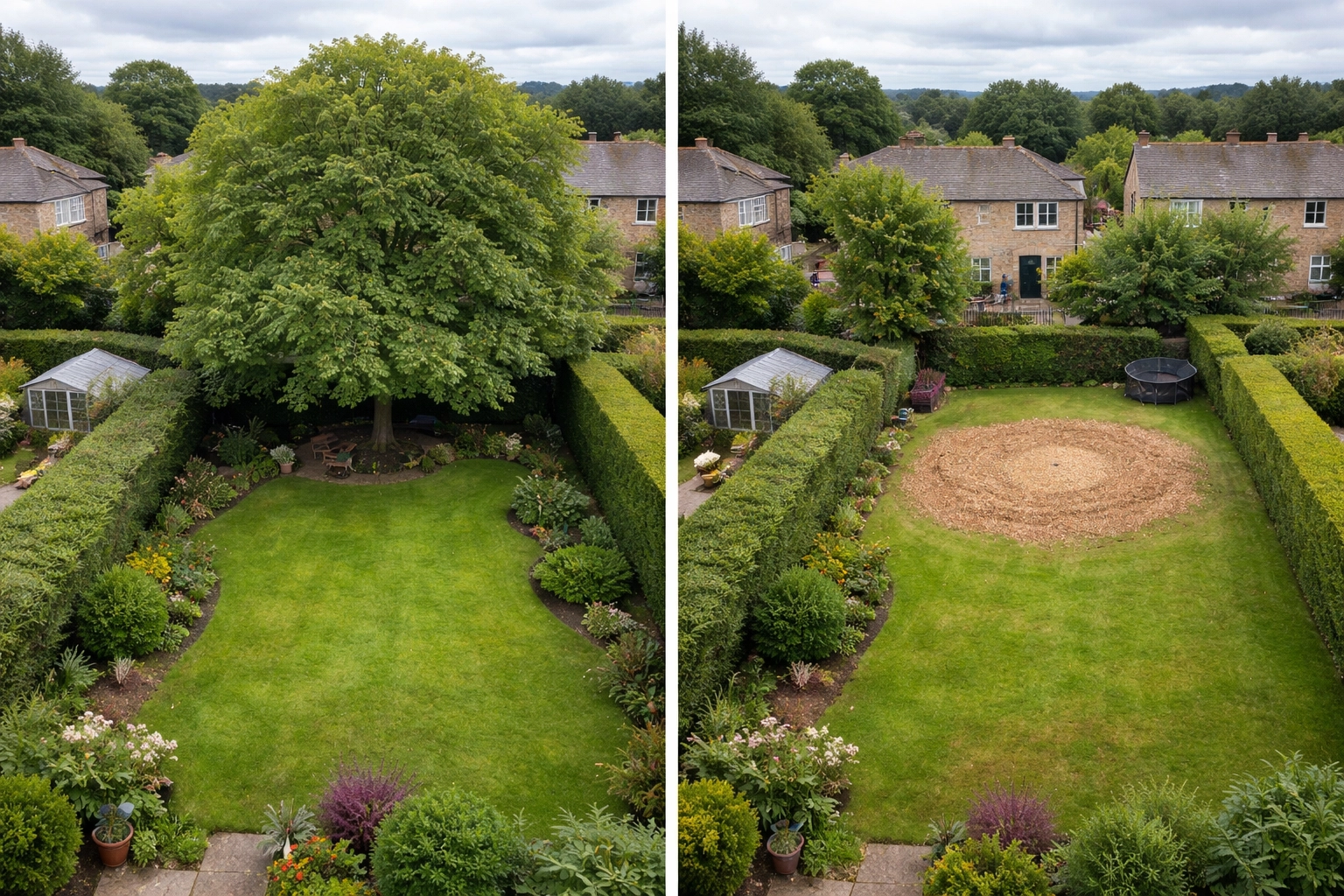
Crown reduction lets you keep the tree as a feature in your garden. You'll still have shade, wildlife habitat, and the visual appeal that mature trees provide. The tree will regrow over time, so you may need further work every few years to maintain its size.
Tree removal creates immediate space and light. You'll have a clear area to work with, whether you want to plant something new, extend a lawn, or use the space for other purposes. However, you'll lose the character and environmental benefits that established tree brings.
Cost Considerations
Crown reduction is generally less expensive than full removal because it takes less time and doesn't require stump removal. However, you may need repeat visits over the years to keep the tree at your desired size.
Tree removal costs more upfront, particularly if stump grinding is included. But it's a one-time expense with no ongoing maintenance for that particular tree.
The exact cost for either option depends on the tree's size, species, location, and accessibility. A large oak in a tight back garden will cost more to work on than a smaller tree with easy access.
Time and Disruption
Crown reduction can usually be completed in a few hours for most garden trees. There's less debris to clear, and the disruption to your garden is minimal.
Tree removal takes longer and creates more mess. Sectional felling, clearing branchwood, and stump grinding can take a full day or more for larger trees. You'll need space for the wood and chippings, though most tree surgery firms will remove all waste from site.
When Crown Reduction Is the Better Choice
Consider crown reduction if:
The tree is healthy. A structurally sound tree with good vitality is worth preserving. Crown reduction can address size issues without sacrificing a valuable garden asset.
You want to keep the tree. Perhaps the tree has sentimental value, provides important privacy screening, or supports local wildlife. Reducing rather than removing lets you keep these benefits.
The problem is manageable. If branches are simply too close to your house or blocking light, targeted pruning can solve the issue. You don't need to remove a whole tree to fix a localised problem.
Planning restrictions apply. If your tree is protected by a Tree Preservation Order or you live in a conservation area in County Durham, you may not be allowed to remove it. Crown reduction is often permitted where removal isn't.
When Tree Removal Makes More Sense
Full removal is usually the right call when:
The tree is dangerous. Dead trees, those with significant decay, or trees that have been badly damaged in storms can fail without warning. If a tree poses a genuine risk to your family or property, removal is the responsible choice.
Disease has taken hold. Some tree diseases cannot be treated effectively. Removing an infected tree can also prevent the disease spreading to healthy trees nearby.
The location is fundamentally wrong. Sometimes a tree is simply in the wrong place: perhaps planted too close to a building years ago, or a self-seeded tree that's grown where it shouldn't. No amount of pruning will fix a poor location.
You're developing the site. If you're extending your home, building a garage, or undertaking significant landscaping work, tree removal may be necessary to make way for construction.
Getting Professional Advice
Unless you have experience in tree care, assessing whether a tree needs reduction or removal isn't straightforward. What looks like a healthy tree might have hidden decay. What seems like a dangerous tree might actually be perfectly sound.
A qualified arborist can examine your tree properly, identify any problems, and recommend the most appropriate course of action. They'll also know whether you need permission from the local council before any work takes place.
At Treemasters, we regularly help homeowners and property managers across Seaham, Sunderland, and County Durham make these decisions. We'll give you honest advice about what your tree needs: even if that means recommending a less expensive option than you were expecting.
Making Your Decision
There's no universal answer to whether crown reduction or tree removal is better. Each tree and each situation is different.
Start by asking yourself what you actually want to achieve. Are you trying to save a tree you love, or are you looking to solve a problem as quickly as possible? Is the tree an asset to your garden, or has it become a liability?
Then get professional input. A site visit from a reputable tree surgeon will give you clarity on your options and help you make an informed choice.
If you'd like advice on a tree in your garden, get in touch with our team. We're happy to take a look and talk through the options with you: no pressure, just straightforward guidance from experienced arborists who know the trees of the North East.
Leave a Reply