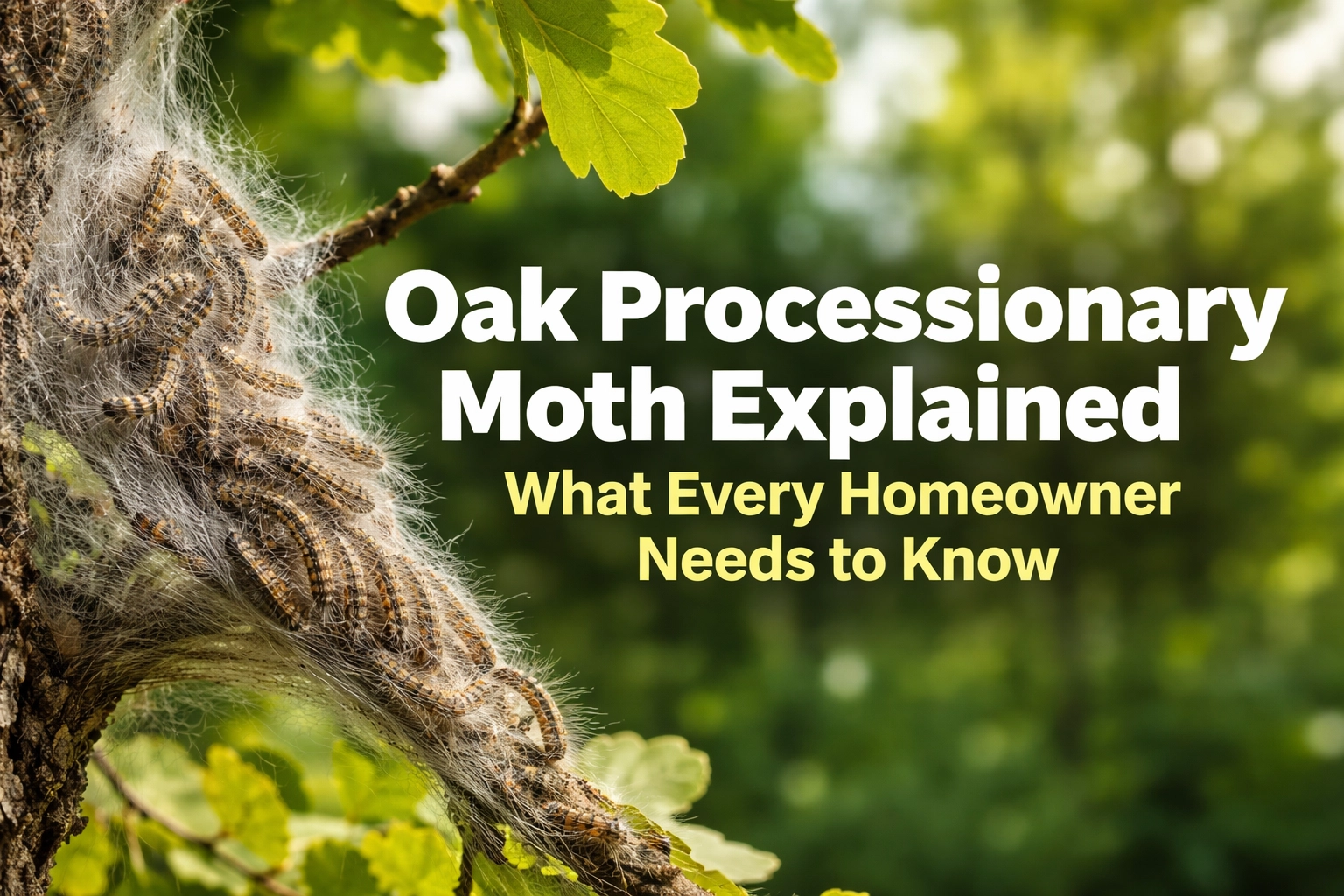
If you have oak trees on your property, there's a pest you need to know about. The Oak Processionary Moth (OPM) has been spreading across the UK over the past two decades, and it poses genuine health risks to you, your family, and your pets.
Originally from southern Europe, OPM has established itself in parts of England and continues to extend its range. While the North East has seen fewer cases than London and the South East, staying informed and vigilant is essential for protecting your tree health and household safety.
This guide covers everything you need to know about identifying, preventing, and responding to OPM on your property.
What Is Oak Processionary Moth?
Oak Processionary Moth is an invasive pest species that feeds exclusively on oak trees. The name comes from the distinctive behaviour of its caterpillars, which move in nose-to-tail processions along branches and tree trunks.
While the adult moths themselves are relatively harmless, the caterpillars are a different story. They're covered in thousands of tiny hairs that can cause serious health problems in humans and animals.
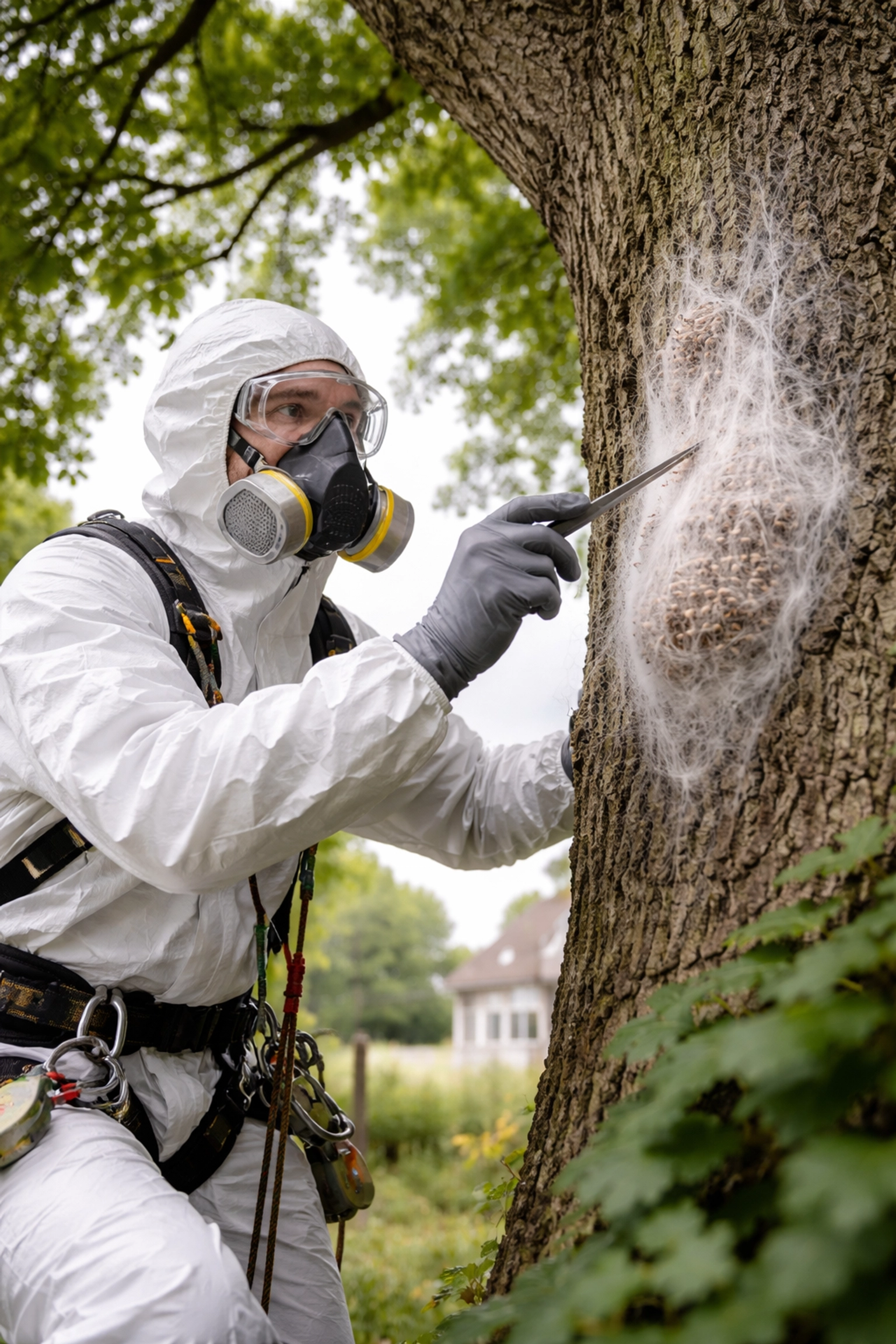
The caterpillars also build distinctive white, silken nests on oak trees, often on the trunk or in branch junctions. These nests can remain hazardous long after the caterpillars have moved on.
How to Identify OPM
Knowing what to look for is your first line of defence. Here's how to spot the different life stages of Oak Processionary Moth.
The Caterpillars
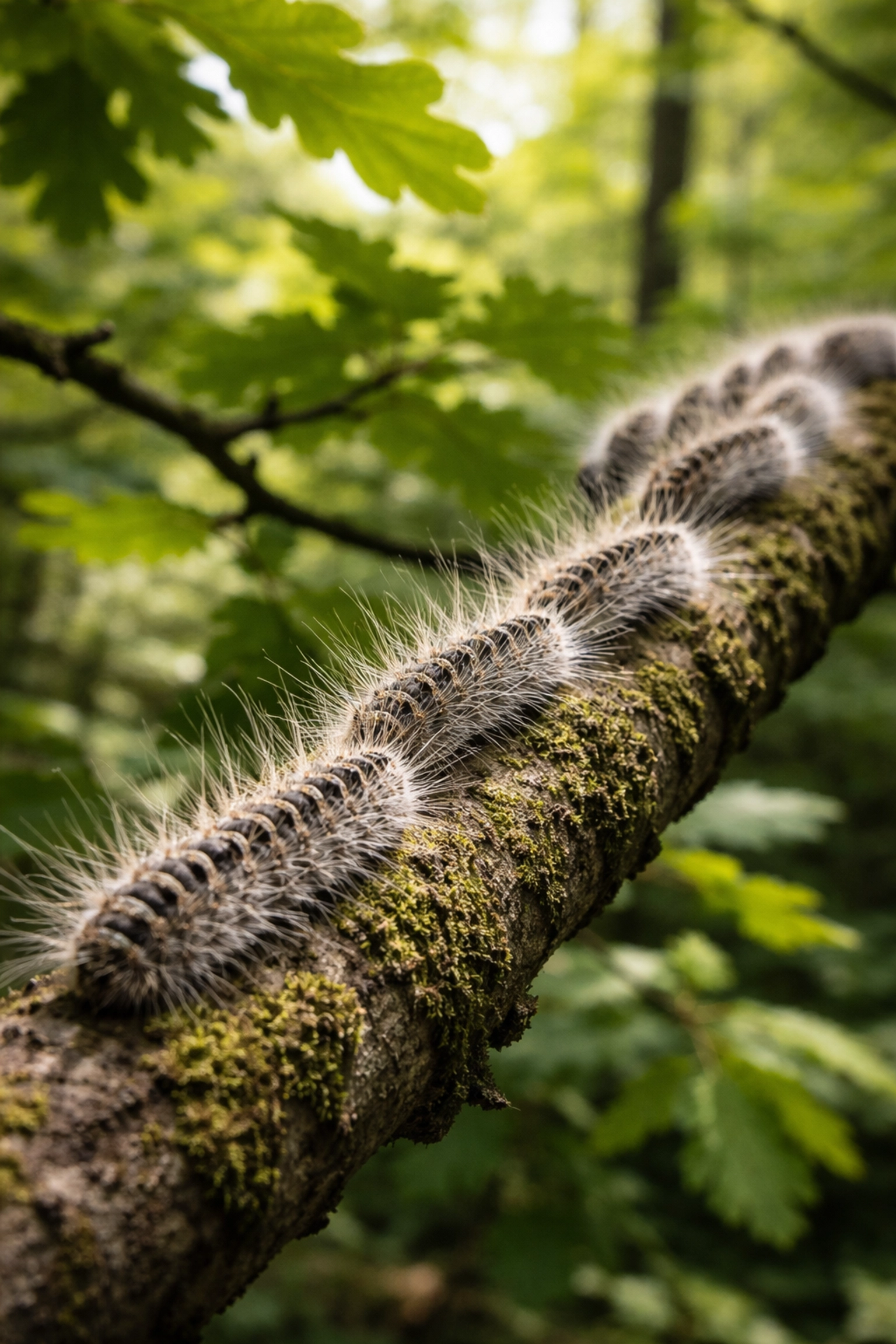
OPM caterpillars are the most recognisable stage. Look for:
- Grey bodies covered in fine, white hairs
- A distinctive dark stripe running down the back
- Groups moving in single-file, head-to-tail processions
- Length of up to 3cm when fully grown
Caterpillars are most visible from May through July. They initially feed high in the canopy where they're difficult to spot, but as they grow, they move lower down the tree and become more noticeable.
The Nests
OPM nests are made of white silk and can vary in size from a golf ball to a football. You'll typically find them:
- On the trunk of oak trees
- In the crook where branches meet
- Sometimes on the underside of larger branches
Older nests turn brown or grey and may remain on the tree for several years. Even abandoned nests contain thousands of shed hairs that remain hazardous.
The Adult Moths
Adult Oak Processionary Moths are less distinctive. They're brown in colour with a wingspan of 25-35mm. Adults emerge in late summer but only live for a few days, during which they mate and lay eggs high in oak trees.
Why OPM Is a Health Risk
This isn't simply a tree pest problem. The caterpillars pose genuine health risks that every homeowner should take seriously.
Risks to Humans
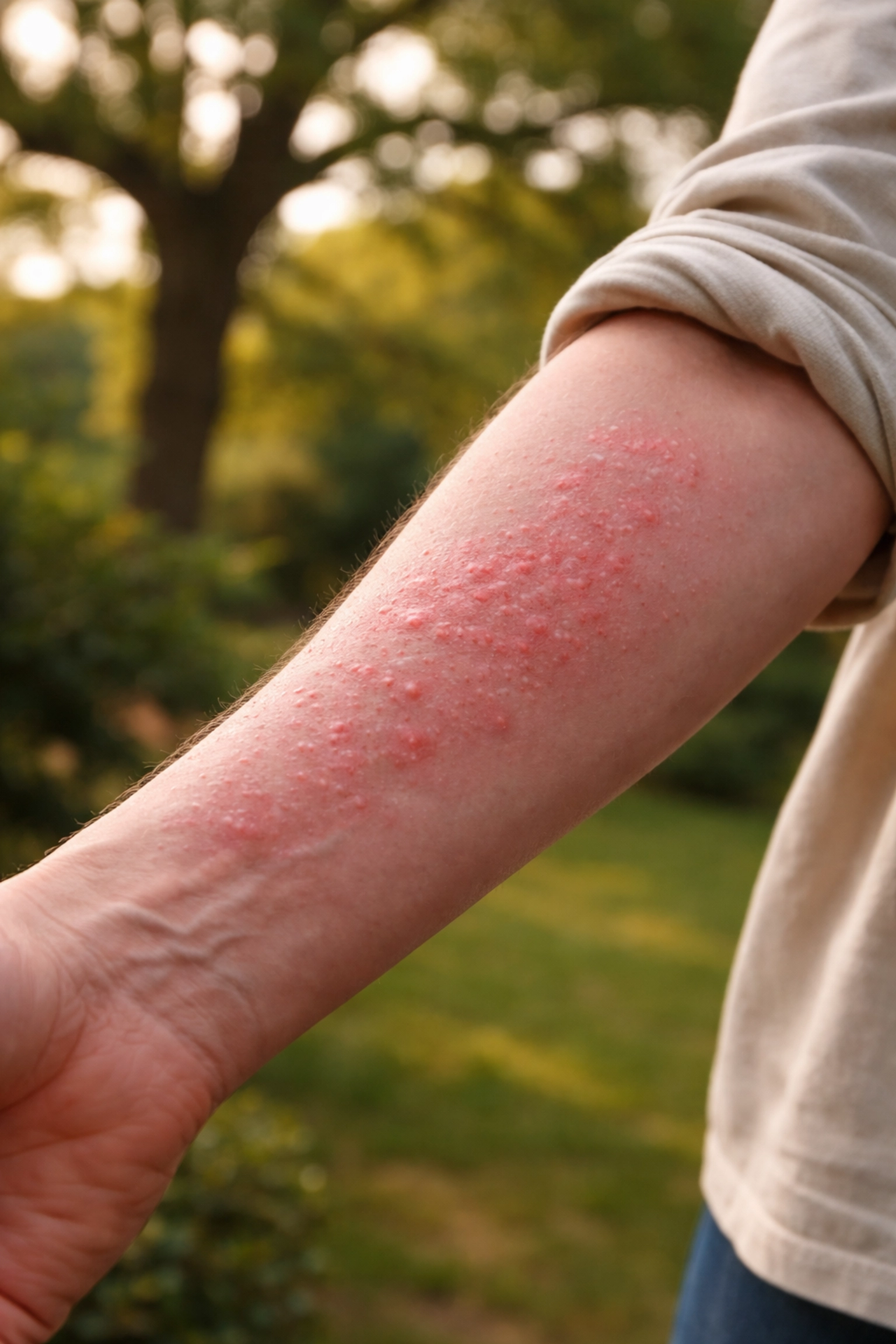
The tiny hairs covering OPM caterpillars contain a protein called thaumetopoein. Contact with these hairs can cause:
- Skin irritation: Itchy, painful rashes that can last for weeks
- Eye problems: Conjunctivitis and, in severe cases, potential damage to vision
- Respiratory issues: Sore throat, breathing difficulties, and asthma-like symptoms
- Allergic reactions: Some people experience more severe reactions requiring medical attention
The hairs are almost invisible and can be carried on the wind, meaning you don't need direct contact with caterpillars to be affected. They can land on washing hung outside, garden furniture, or be inhaled while walking near infested trees.
Risks to Pets
Dogs are particularly vulnerable as they often investigate things with their noses. Contact with OPM hairs can cause:
- Swelling of the tongue and throat
- Excessive drooling
- Difficulty breathing
- Eye irritation
If you suspect your pet has come into contact with OPM, seek veterinary attention immediately.
When Is the Risk Highest?
The greatest risk period runs from May through July when caterpillars are actively feeding and growing. During this time, they shed hairs continuously, and disturbance of nests (even by wind) can release clouds of hazardous hairs into the air.
The OPM Life Cycle
Understanding when OPM is most active helps you know when to be vigilant and when to arrange inspections with a qualified tree surgeon.
| Season | Stage | Activity |
|---|---|---|
| September – April | Eggs | Moths lay eggs on thin oak branches; eggs overwinter |
| April – May | Early caterpillars | Eggs hatch as oak trees produce new leaves |
| May – July | Active caterpillars | Six growth stages; increasing hazard as hairs develop |
| July – August | Pupation | Caterpillars build silken nests and transform |
| August – September | Adult moths | Moths emerge, mate, and lay eggs |
What to Do If You Find OPM
If you discover caterpillars or nests that you suspect might be OPM, there's one critical rule to follow.
Do not attempt removal yourself.
This cannot be stressed enough. Without proper protective equipment and training, disturbing OPM nests can release thousands of hairs into the air, putting you and others at serious risk.
Step-by-Step Response
- Keep your distance – Move away from the affected tree and keep children and pets away from the area
- Mark the location – If safe to do so, mark the area so others know to avoid it
- Report it – Use the Forestry Commission's Tree Alert service online, email opm@forestrycommission.gov.uk, or call 0300 067 4442
- Contact a professional tree surgeon – Qualified arborists with OPM training can safely assess and remove infestations
If you've had contact with the hairs and experience symptoms, seek medical advice promptly.
Why Professional Removal Is Essential
OPM removal requires specialist knowledge, equipment, and disposal procedures. Here's why calling a professional tree surgeon is the only safe option.
Specialist Equipment
Professional contractors use full-body protective suits, respiratory equipment, and eye protection when dealing with OPM. Standard gardening gloves and a dust mask simply aren't adequate.
Proper Removal Techniques
Professionals use specific methods to minimise hair dispersal during removal. This often includes dampening nests before removal and using vacuum equipment designed for the task.
Safe Disposal
OPM waste must be disposed of as hazardous material. It cannot be composted or put in regular green waste. Professional contractors have established disposal routes that comply with regulations.
Tree Health Assessment
A qualified tree surgeon can also assess the overall health of your oak trees. Heavy infestations can weaken trees over successive years, and early intervention helps protect your valuable specimens.
Prevention and Monitoring
While you can't completely prevent OPM, there are practical steps to reduce risk and catch infestations early.
Regular Inspections
Check your oak trees regularly between April and September. Look for:
- Unusual caterpillar activity
- White silken nests forming
- Evidence of leaf damage high in the canopy
If you're unsure what you're looking for, consider booking an annual tree health inspection with a qualified tree surgeon.
Encourage Natural Predators
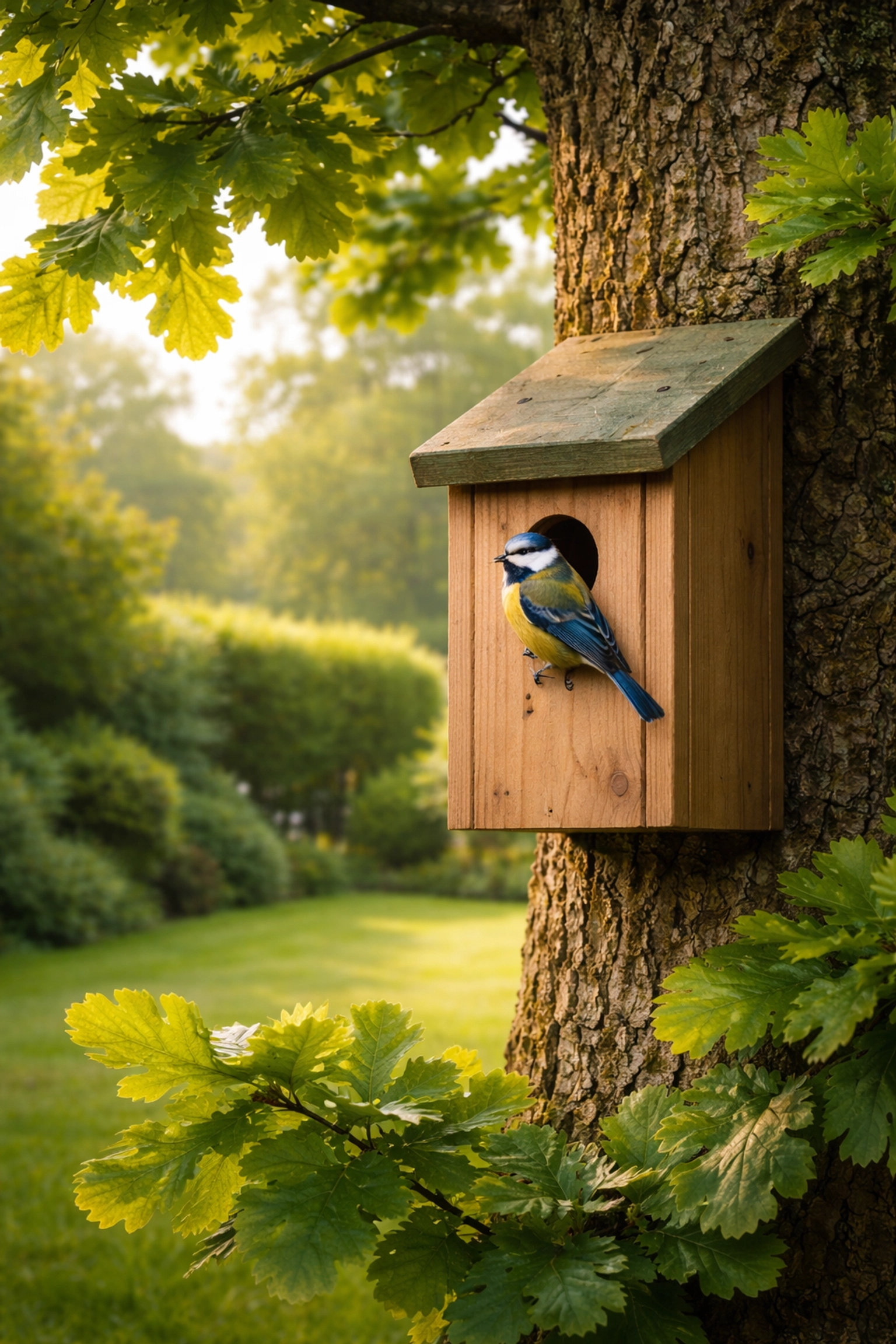
Blue tits are voracious consumers of OPM caterpillars. A single blue tit family can eat thousands of caterpillars during the breeding season. Installing nesting boxes near your oak trees is a simple, natural control measure.
Winter Crown Work
Some tree surgeons offer autumn and winter pruning specifically designed to remove egg masses before they hatch in spring. If your trees are in an area where OPM is established, this preventative approach can reduce spring infestations.
When to Call a Tree Surgeon
Contact a professional arborist if you:
- Find suspected OPM caterpillars or nests on your property
- Have oak trees in an area where OPM has been reported
- Want a tree health assessment or advice on prevention
- Need emergency removal of an active infestation
At Treemasters, we're experienced in dealing with tree pests and can provide safe, professional assessment and removal services. If you're in Seaham, Sunderland, County Durham, or anywhere in the North East and you're concerned about OPM or any other tree health issue, get in touch with our team.
Stay Informed, Stay Safe
Oak Processionary Moth is a genuine concern for homeowners with oak trees, but it's manageable with the right knowledge and professional support. Regular monitoring, prompt reporting, and relying on qualified professionals for removal are the keys to protecting your family and your trees.
If you'd like to learn more about our tree surgery services or book a tree health inspection, we're here to help.
Leave a Reply