
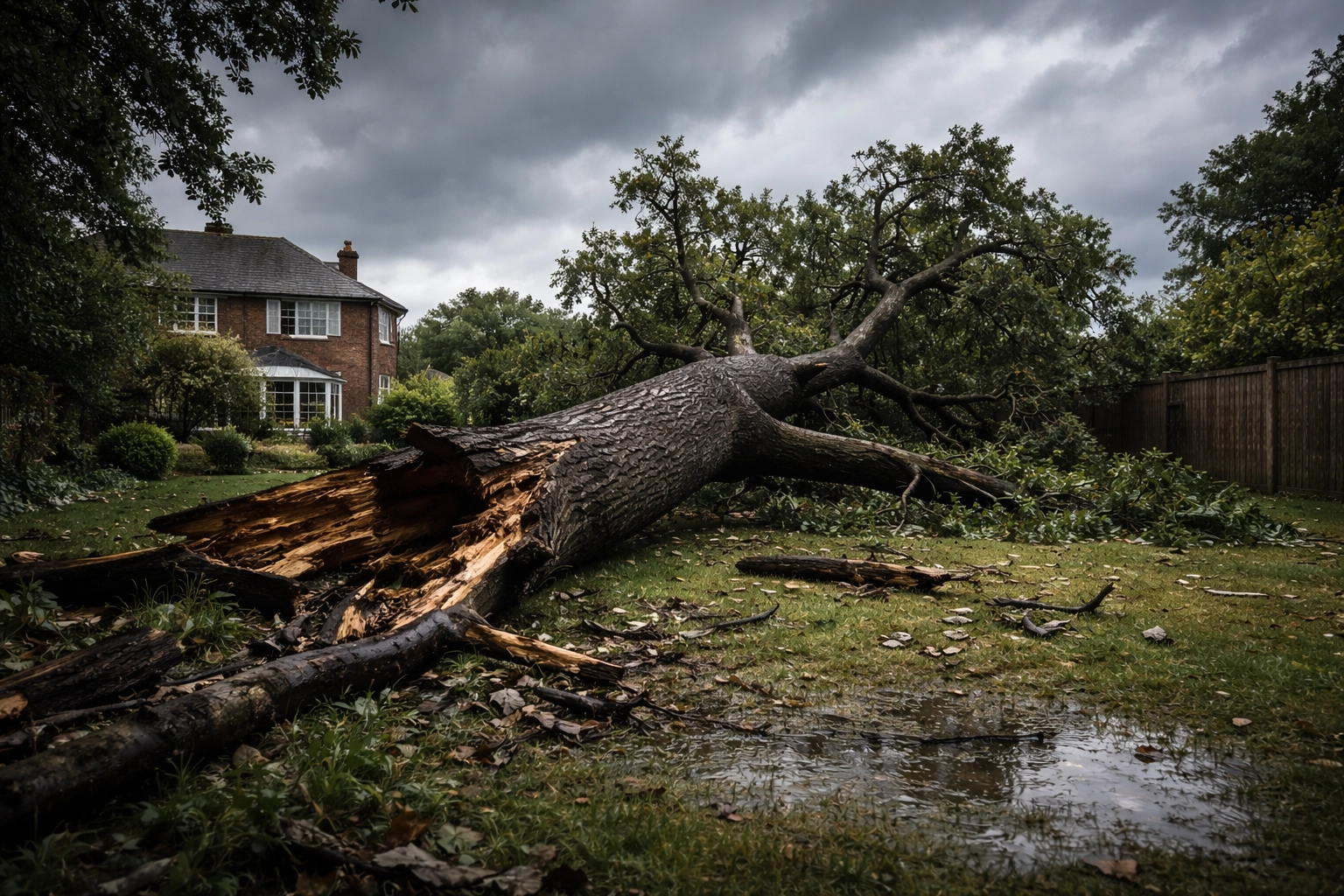
We've all been there. You wake up after a wild night of howling winds and lashing rain, peek out the window, and your heart sinks. There's a massive branch sprawled across your lawn: or worse, a tree leaning dangerously close to your roof.
Storm damage is stressful. Your first instinct might be to grab a saw and sort it yourself. But here's the thing: emergency tree work can be seriously dangerous if you don't know what you're doing. Every year across the UK, people get hurt trying to handle fallen trees and branches without proper training or equipment.
The good news? With a clear head and the right approach, you can keep yourself and your family safe while getting your property back to normal. Here's our straightforward guide to handling storm damage the smart way.
Why Storm-Damaged Trees Are More Dangerous Than They Look
Before we dive into the steps, let's talk about why you need to be extra careful after a storm.
Storm-damaged trees are unpredictable. A trunk that looks stable might have internal cracks you can't see. Branches hanging in the canopy: often called "widow-makers" by arborists: can drop without warning. And if there's been flooding or waterlogged soil, even standing trees can topple over hours after the storm has passed.
Add in the possibility of downed power lines tangled in branches, and you've got a genuinely hazardous situation. Taking five minutes to assess things properly could save you from a trip to A&E.
Step 1: Wait for the All-Clear
We know it's tempting to rush outside the moment the rain stops. But hold on.
Only venture out when local authorities confirm it's safe. Storms can have lulls that trick you into thinking they've passed when more severe weather is on the way. Here in the North East, we're no strangers to Atlantic weather systems that can pack a second punch.
Check your local council updates, tune into BBC Radio Newcastle, or keep an eye on Met Office warnings. If there's still an amber or red weather alert in place for County Durham or Sunderland, stay indoors.
Once you get the green light, you can start assessing the situation: but take it slow.
Step 2: Check for Downed Power Lines First
This is absolutely critical, and it's where most people go wrong.
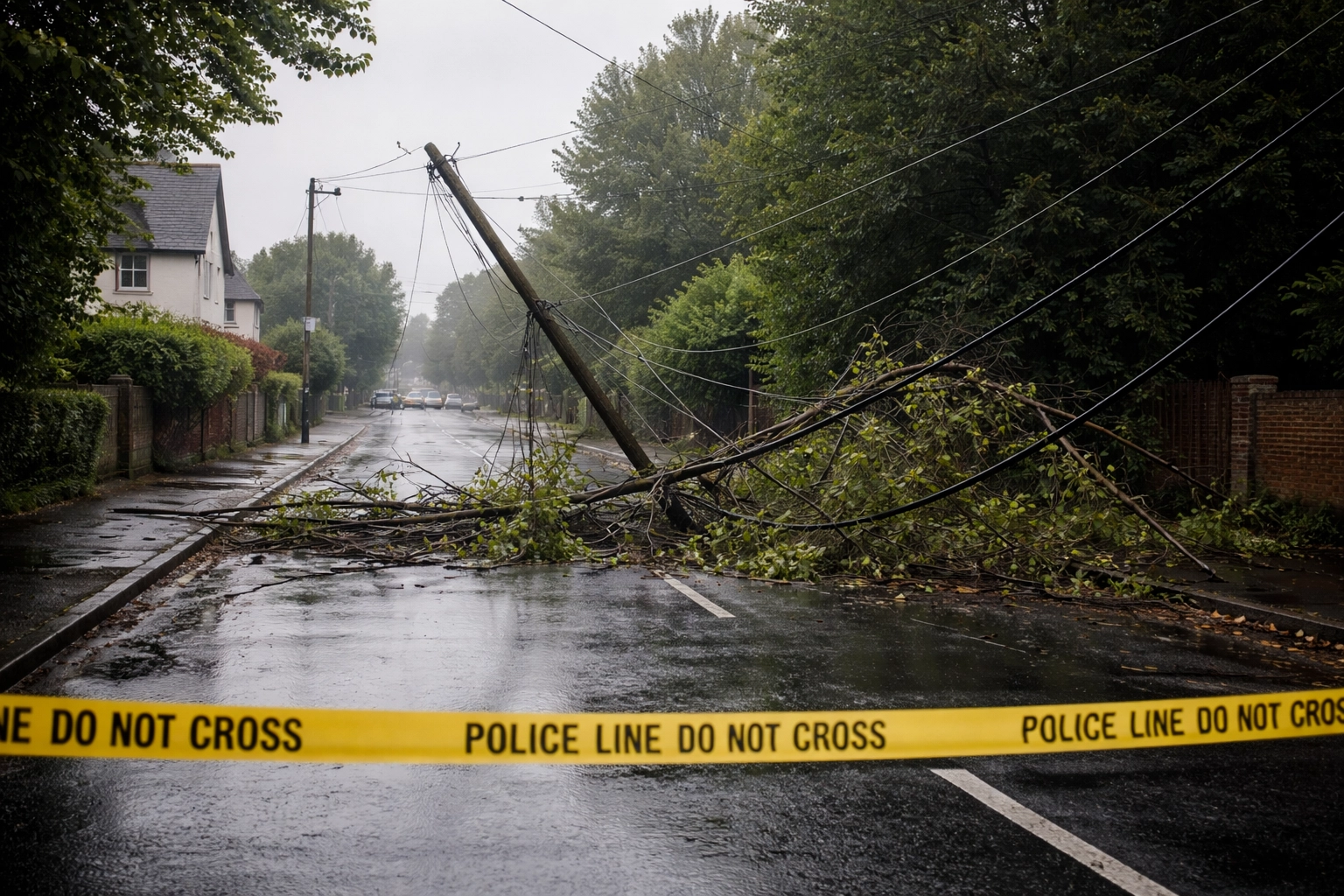
Before you go anywhere near a fallen tree, scan the entire area for downed power lines. Treat every wire on the ground as if it's live: because it very well might be. Even cables that look dead can carry lethal voltages.
Here's what you need to do:
- Keep at least 30 feet away from any downed lines
- Don't touch anything that's in contact with a wire: fences, puddles, branches, nothing
- Call Northern Powergrid on 105 (the free UK power cut number) and report it immediately
- If a tree is touching power lines, do not attempt to move it. This is strictly a job for professionals and the utility company
It's not worth the risk. Every year, people across the UK are seriously injured or killed by assuming a downed line was safe. Don't be one of them.
Step 3: Assess the Damage From a Safe Distance
Right, the area's clear of electrical hazards. Now it's time to get a proper look at what you're dealing with.
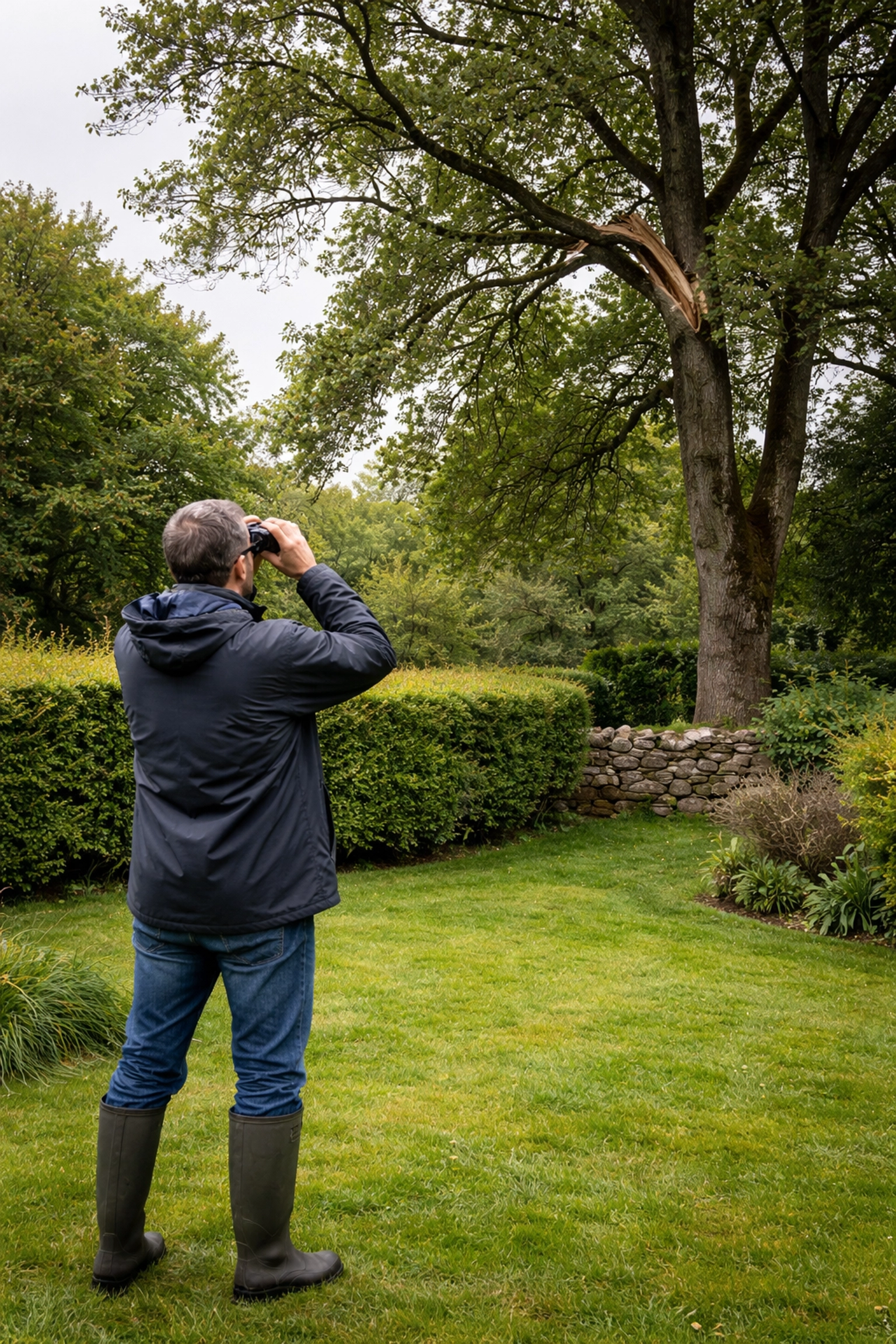
Stay back and survey your trees carefully. Grab a pair of binoculars if you have them: they're brilliant for spotting problems up in the canopy without getting too close.
Here's what to look for:
- Cracked or split trunks – These trees are structurally compromised and could collapse
- Uprooted trees – Even partially uprooted trees can fall suddenly
- Hanging branches – Those widow-makers we mentioned earlier
- Trees leaning towards structures – Your house, garage, shed, or neighbour's fence
- Damaged root plates – Look for lifted soil around the base of trees
If you spot any of these issues, keep your distance. A tree that's survived the initial storm can still come down in the hours afterwards, especially if the ground is saturated.
Top tip: Take photos and videos of all the damage before you touch anything. You'll need these for your insurance claim, and they're also helpful when you call in professional help.
Step 4: Gear Up Properly
Let's say you've got some small branches and debris scattered across your garden: nothing touching structures or power lines, just general mess. Before you start tidying up, make sure you're properly equipped.
Here's your basic safety kit:
- Sturdy boots with non-slip soles (steel toe caps are even better)
- Thick gloves – rubber or leather work gloves
- A hard hat or helmet – falling twigs and small branches are a real hazard
- Eye protection – flying debris can cause nasty injuries
- Your mobile phone – fully charged, in case of emergencies
If it's getting dark or the weather's still overcast, bring a decent torch. And honestly? If you're feeling tired, stressed, or rushed, just leave it until tomorrow. Most cleanup can wait: your safety can't.
Step 5: Know When to Call the Professionals
Here's where we need to be honest with you. There's a very limited amount of emergency tree work that's safe for homeowners to tackle themselves.
You can safely handle:
- Small branches and twigs already on the ground
- Debris in open areas away from structures
- Light garden tidying with basic tools
You need to call in professionals if:
- Any tree is leaning on your house, garage, or other structure
- Trees are tangled in or near power lines
- The trunk is cracked, split, or showing signs of structural failure
- Work would require a ladder or chainsaw at height
- You're dealing with large, heavy timber
- There's any risk to you, your family, or your neighbours
Emergency tree work isn't like regular gardening. It requires specialist equipment, proper training, and insurance. A professional tree surgeon can assess risks you might miss, work safely at height, and remove hazardous trees without causing further damage to your property.
How Treemasters Can Help After a Storm
When storms hit Seaham, Sunderland, and County Durham, our phones start ringing. We've helped hundreds of homeowners across the North East deal with emergency tree situations: from massive oaks blocking driveways to dangerous limbs hanging over conservatories.
Here's what we bring to the job:
- Rapid response when you need us most
- Fully trained and insured arborists with years of experience
- Professional equipment for safe removal of even the largest trees
- Advice on insurance claims and what documentation you'll need
- Follow-up support including stump grinding and site clearance
We know how stressful storm damage can be. You're worried about your home, your family, and the mounting costs. Our job is to take that weight off your shoulders, make your property safe, and get everything sorted as quickly as possible.

Don't Wait Until It's Too Late
One final piece of advice: if you've noticed trees on your property that look a bit dodgy: dead branches, signs of decay, trees that lean more than they used to: don't wait for the next storm to deal with them.
Regular tree inspections and maintenance can prevent emergency situations altogether. A crown reduction here, some deadwood removal there, and you've dramatically reduced the risk of storm damage.
If you're in Seaham, Sunderland, County Durham, or anywhere else in the North East and you'd like us to take a look at your trees, get in touch. We're always happy to give honest advice: even if the answer is "your trees are fine, don't worry about it."
Stay Safe Out There
Storm damage is never fun, but it doesn't have to be dangerous. By following these five steps: waiting for the all-clear, checking for power lines, assessing from a distance, gearing up properly, and knowing when to call the professionals: you can protect yourself and your property.
And remember: when in doubt, don't risk it. Give Treemasters a call, and we'll take care of it for you.
Leave a Reply